The sixth ILO committee on solidarity

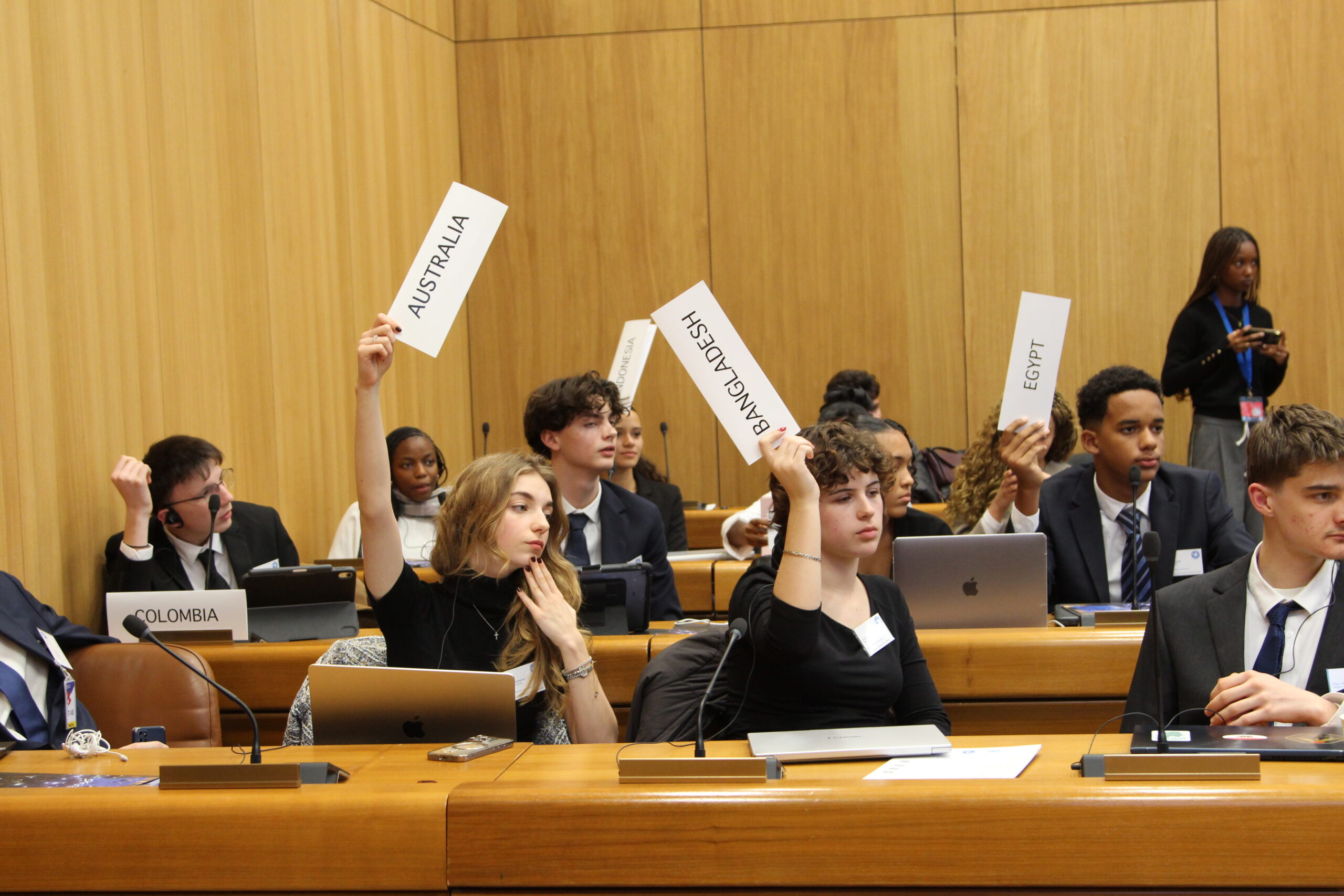
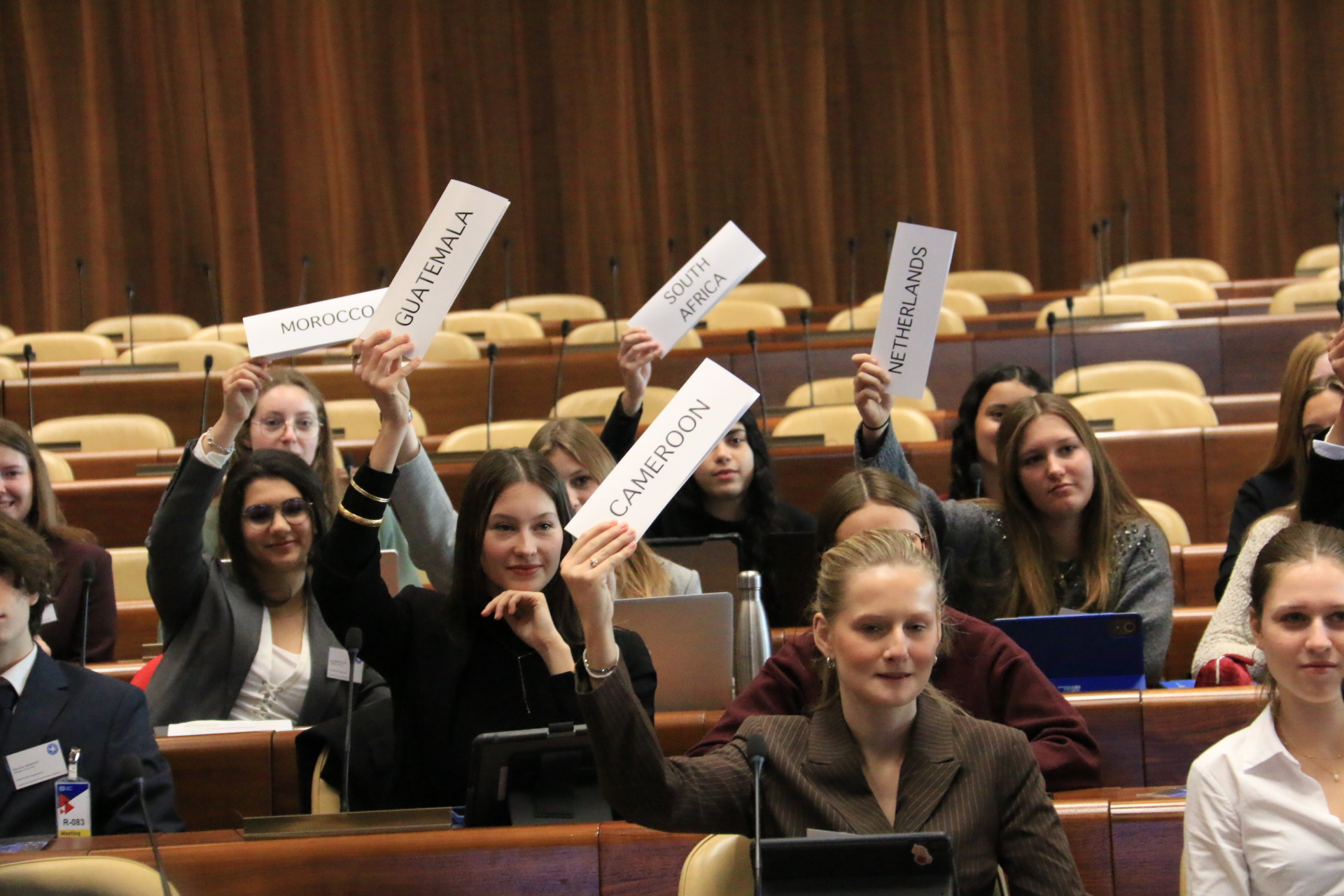
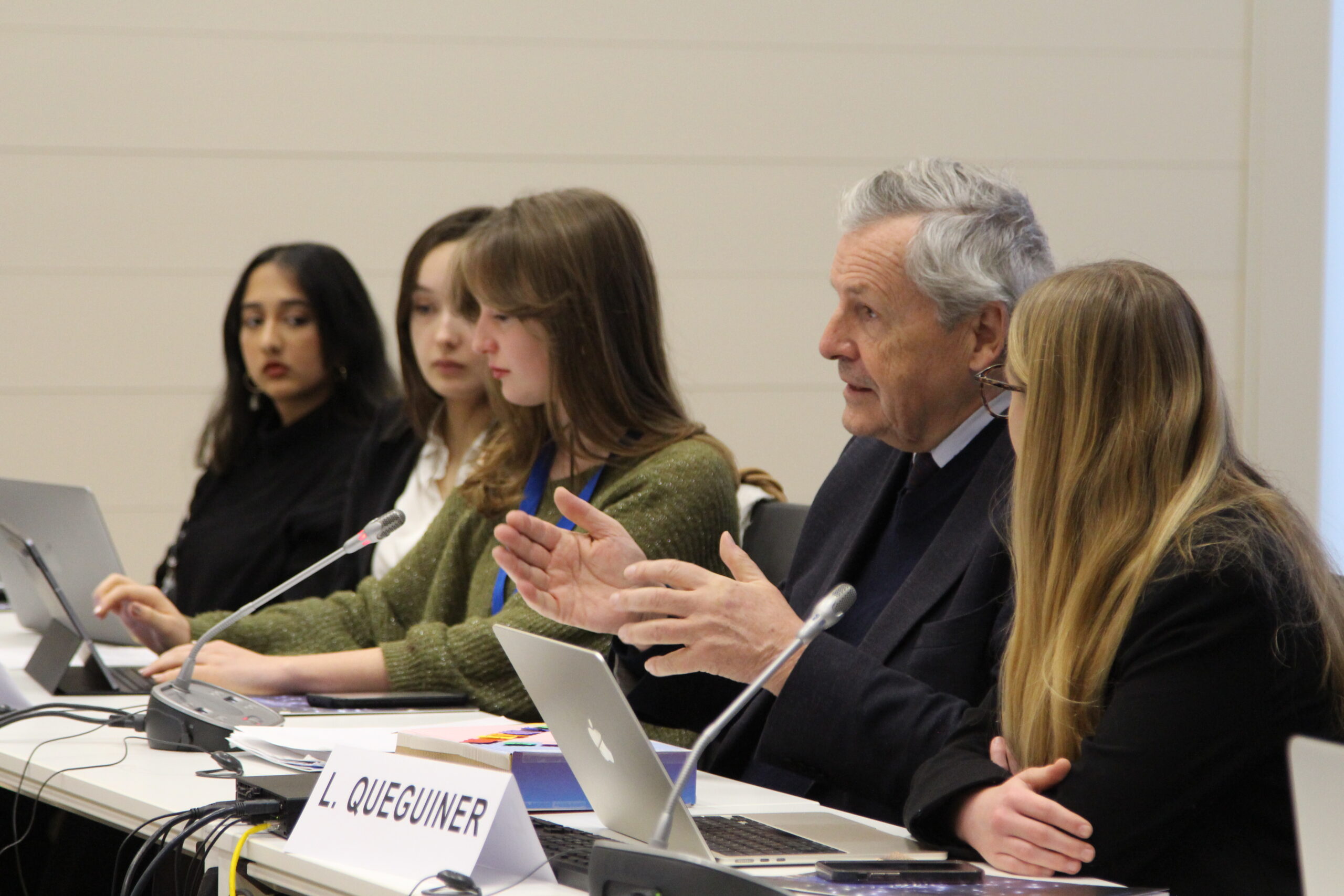
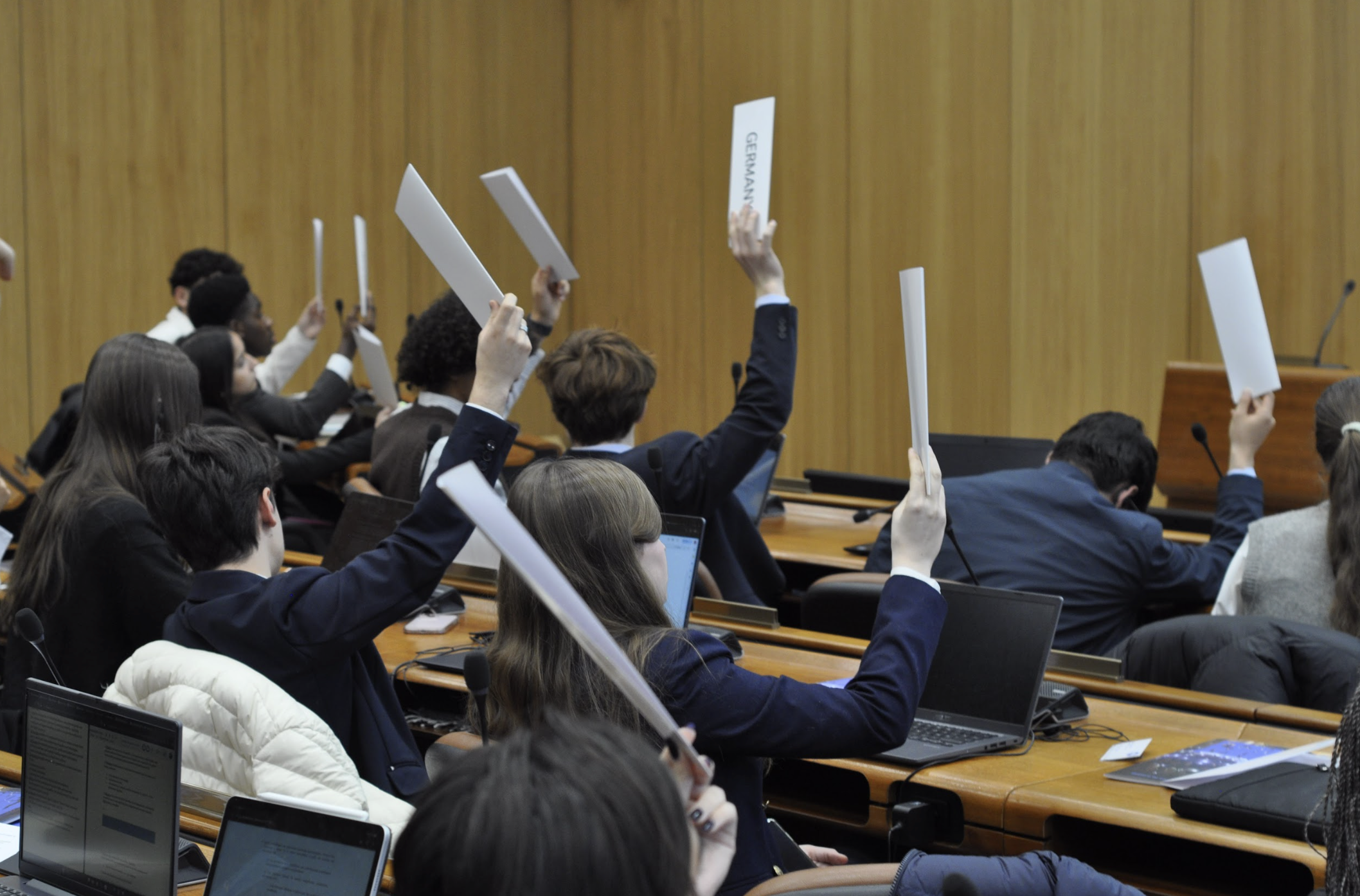
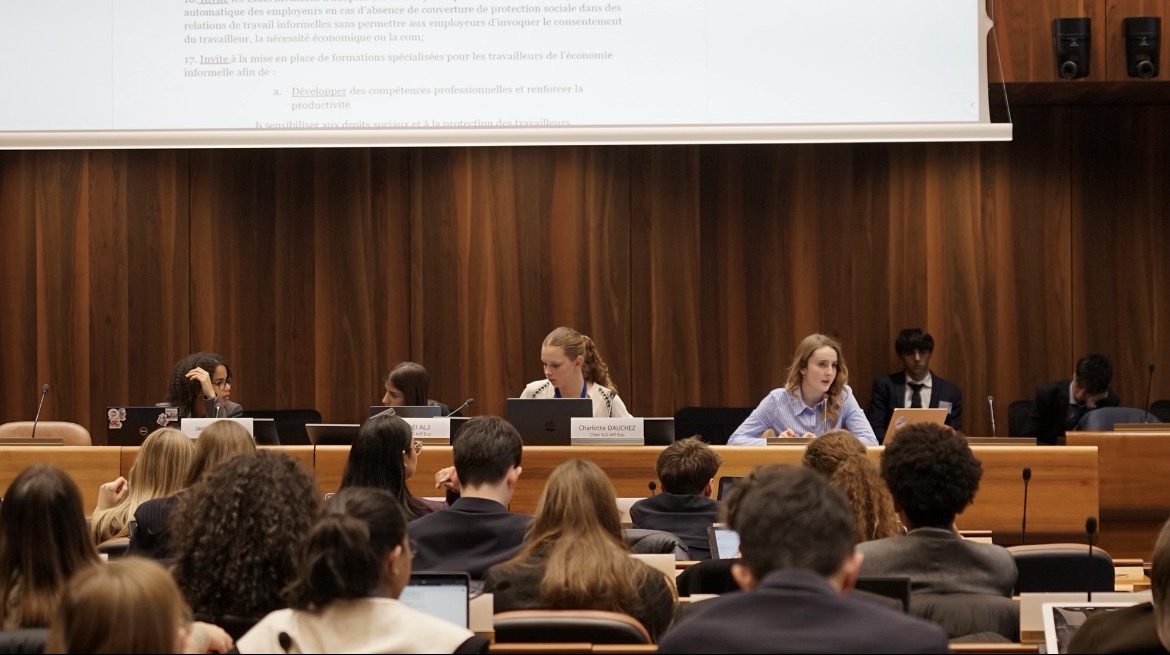
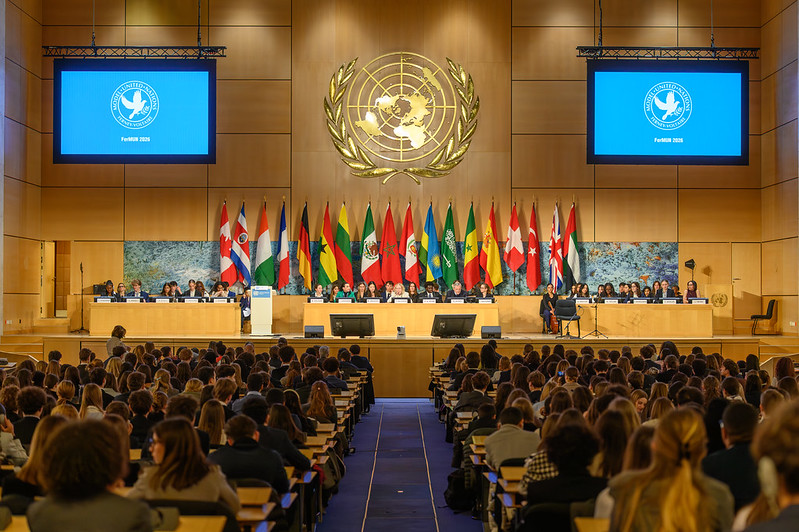
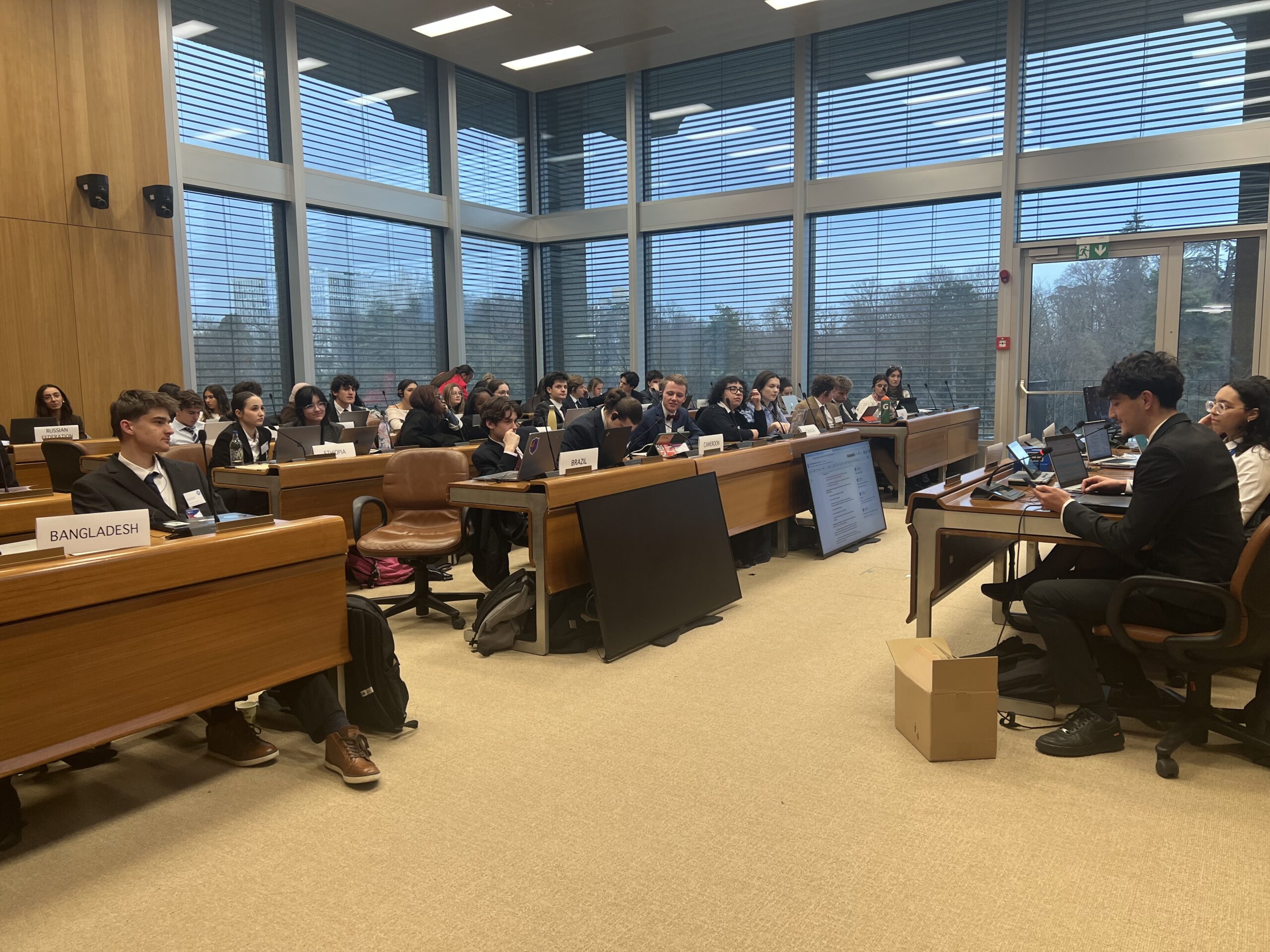
The sixth ILO committee on solidarity, chaired by Jasmine Benlechhab, Shirel Nakache, and Dahlia Djelouah, had the honour to debate in an ILO assembly room the 10th, 11th and 12th of January 2024.The bilingual tripartite committee was made up of 42 delegates representing the workers, employers and governments of 14 delegations. The delegates dedicated their time to debate two issues : ‘What solidarity policies should be adopted to reduce unemployment?’ and ‘How can the Social and Solidarity Economy be developed on a global scale?’

The debate started with a lobbying session on the first issue. Delegates were required to discuss informally, to form alliances and begin to write their resolutions. Two resolutions emerged by the end of the first day. The first to be debated was submitted by the Brazilian Government and co-submitted by various delegations of workers, governments and employers representing Brazil, Cameroon, China, Guatemala, India, Kiribati, Mexico, Morocco, Pakistan, Russia and Saudi Arabia. The second resolution was submitted by the UK government and was co-submitted by the remaining delegations present. 

The debates opened on Thursday with several relevant speeches delivered by delegations which showed their passion and investment as delegates who came from all around the world, united in adopting policies to fight unemployment. “Reducing unemployment is much more than a statistic” affirmed the UK government delegation as it presented it’s resolution.The resolutions submitted by the two groups had unique solutions designed to reduce unemployment, such as encouraging exchanges between universities and firms to create better opportunities for students, urging the creation of a commission based around the informal sector. 

Several important amendments emerged as delegates debated passionately, such as the Brazilian Government proposing a subclause which called upon the creation of an innovative program that has been explicitly designed to educate and train elderly and disabled individuals which would equip them with necessary skills to integrate into the workforce and reduce unemployment. 

The debate became especially heated as the delegations discussed how to proceed with financial subventions destined towards unemployed individuals. Many delegates such as the USA workers, pointed out that overly generous financial subventions and systems, could be exploited and could possibly lead to disencouragement of the unemployed towards looking for work. Despite these striking arguments, many delegations fiercely defended these systems and subventions, notably because of possible stigmatization and social exclusion that may occur if the mention of these systems were to be striked from the resolution. Morocco workers notably said “Nous ne pouvons pas laisser des humains, même s’ ils exploitent le système, à la misére”.

The second issue, concerning the development of the Social and Solidarity Economy on a global scale, began to be discussed on Thursday evening as delegates excitedly lobbied and awaited the formal debate the next day. Two resolutions appeared by the end of the evening. The debate was even more gripping than the previous, with dozens of compelling amendments, speeches and arguments pronounced all throughout the debate. 

Despite many fascinating amendments, one in particular served as a catalyst to propel a riveting debate: the delegation of Mexico employers proposed to strike the words “humanitarian aid” from a clause in the resolution, arguing that they had no place in such a resolution as “the social and solidarity economy model is not a question of life or death”. This argument was  largely contested by diverse delegations such as China’s employers, Cameroon governments and even Russia workers as they insisted that humanitarian aid is an important aspect of this economic strategy and that it would be against the principles of the ILO 6 committee, focused on solidarity, to neglect it. Therefore, the amendment did not pass.

Indeed, delegations faced heated discussions as major questions arose: should the emphasis be put on individual nations implementing policies and exercising their sovereignty, or should countries use multilateralism and work together? Several hours of fierce speeches, avid points of information and intense discussions passed on the last day between several delegations, but most notably the USA’s employers, Mexico’s workers, Brazilian government, Russian workers and Cameroon’s employers. 

As the debates concluded, delegates took to the assembly floor for moving concluding speeches. Concerning the first resolution, the delegate of the USA’s workers invited it’s fellow delegations to vote in favour of the resolution by affirming that “Our decision is not solely an economic decision, it is also a moral choice. We are making the choice to build a world where the economy serves humanity, and not the contrary.”

The hard work of the delegates paid off as all four resolutions debated passed the assembly vote by a large majority.

Marta Prokopchuk and Malo Lesprit

The 5th bilingual committee for young people in the world of work

Chaired by Aurore STAMATIADIS, Emilie ESCOT and Ava TOUBOUL, the 5th committee held discussions at the ILO in Geneva on 11, 12 and 13 January 2024. The committee was made up of 46 delegates representing 17 delegations. They debated two issues: ” How can internships be upgraded to provide young people with a decent working environment?”  and “How to develop an apprenticeship system in professional training to fight against youth unemployment?

Following the lobbying phase, two resolutions were proposed for the first issue. The first was presented by the delegate representing Japanese workers. Other allies were the governments of Saudi Arabia, the Russian Federation and the United Kingdom, as well as representatives of workers and employers from China and Pakistan, workers from the United Kingdom, Colombia and Cameroon, and employers from the United States. During the open debates, some doubts were expressed by the Chinese employers’ representative, who was generally against the resolution. After discussing whether or not to apply 18 amendments, 12 of them were adopted.  The debates were then closed, and speeches were made in favour (by the representatives of the Japanese workers, the government and the British workers) and against (by the representative of the Moroccan employers). Finally, the resolution was adopted, with 27 votes in favour, 19 against and 12 abstentions.

Following this first part of the conference, we interviewed three representatives: the alliance’s representative for this resolution, and two other delegates who were involved in proposing amendments.  

Interview of the Japanese government: 

The Japanese delegation, which presented the draft itself, is pleased with the simplicity with which this first resolution was managed. Indeed, the various players quickly agreed on the clauses they wanted to see appear. It also confided that it had been very interesting to debate the amendments, which were, in their words, “interesting because of their flexibility”. With regard to the debates on clause 6, which deals with the issue of the State covering the cost of trainees, the representative is of the opinion that the government should contribute half of the cost.

Interview with the delegate representing UK employees:

The delegation is satisfied with what has been put in place, particularly on the issue of work opportunities for young people. However, they have problems with some of the amendments, with governments trying to oust the resolutions they are trying to put in place. This is perhaps due to the difficulties encountered in finding a point of agreement with their allies. This resolution is acceptable to them, despite a few points on which they disagree. They nevertheless consider that the objective of introducing more resources for young trainees has been partially achieved.

Interview with the US employers’ representative:

The delegation representing employers in the United States hopes to see a drop in the youth unemployment rate as a result of the debates. In their view, this resolution would be capable of achieving this goal with the addition of a few amendments. However, they also took into account the fact that, as a developed country, their interests and resources vary greatly. They are keeping an open mind with regard to amendments from developing countries and how they can help and encourage this resolution.

The second resolution was presented by the Moroccan employer. Their allies were the government of Brazil, Cameroon, the entire delegation from Colombia, India, Morocco, Mexico and the employers from Russia. The delegates discussed 9 amendments, 8 of which were adopted. The debates were once again lively, with speeches for and against validation of the resolution, which was finally accepted by a majority of 54 votes to one.  

Following a second phase of lobbying, two resolutions were proposed. 

The first, presented by the government of China, brought together the signatures of the government and workers of France, the governments of China, the United Kingdom, Morocco, Pakistan and Cameroon, the governments and employees of Saudi Arabia and the Russian Federation, the government and employers’ representative of Mexico and the employees of India. 7 amendments were adopted out of the 10 that were debated. This resolution was finally adopted by 40 votes in favour, 14 against and one abstention. 

Finally, the last resolution on which the representatives tried to agree was presented by the employers’ delegate of the United States. Cosubmitters were the governments of Guatemala, Colombia, Cameroon, the delegation of the workers’ and employers’ representatives of Russia, Morocco, the workers’ representatives of Mexico and the United Kingdom, and the government, employers’ and workers’ representatives of Japan. 12 amendments were proposed, 8 of which were adopted.  A motion to divide the issue was then seconded: the representatives voted on the clauses individually, which enabled them to vote on a resolution that was acceptable to the majority.

Eloïse GHESTEM, Julie CARVAILLO, Elisa DEVELAY.

The ILO 4 Committee on Innovation focused on Artificial Intelligence (AI) and the digital economy.

It was the scene of passionate and intense debates during these 3 days of conference, with differences of views but obviously always with respect, despite some speeches being somewhat vehement.

The two issues addressed were: 

How to protect workers whose jobs could disappear and how to use AI to improve working conditions and enable new opportunities?

Is the digital economy a path to more and better jobs for young people?

The first issue particularly divided the ILO 4 committee, with various political positions and different opinions on the measures to be adopted.

Some delegates were pleased to answer our questions on their positions and ideas regarding the resolutions, as well as countries considered allies. We thank these delegates for the valuable time they have given us and which has allowed us to better understand the dynamics of the different countries and the different alliances that have formed. It is thanks to them that we can bring you a clear and objective vision of the debates that took place in ILO 4.

During the lobbying phase, several countries came together and after a while we had three different groups that eventually merged into two groups. The first brought together mainly the United States and Sweden, which initially disagreed, and the second was rather composed of China and several emerging countries, such as Mexico or Eswatini. 

Following the exciting speech of Janine Berg, we witnessed a phase of debate between the various states on the clauses previously discussed, sometimes in a climate of conflict, particularly between the delegate of the Chinese government and that of the United States. Delegates clashed in a merciless debate, where China even asked for a motion of apology and censure in the face of some aggressive arguments from other delegates who accused it of denying the facts. 

During the amendment phase, the Swedish employers’ delegate wished to delete a clause, which provoked a disagreement on the part of the Swedish government delegate, giving rise to a new debate between several countries, such as Japan, theUni, USA, or Eswatini.

Following the amendment phase, the resolution carried by China was finally adopted by an absolute majority, followed by the US resolution.

The second issue, focused on the digital economy, resulted in two resolutions, one presented by the Indian government and the other by the employers of Morocco. Both were based on the sharing of resources, the education of new generations, as well as assistance to less developed countries, for which there is a real technological gap compared to countries with higher labour intensity. 

Before starting the lobbying phase, some delegations had the opportunity to present their position, including Indonesian workers, who expressed interest in creating laws to protect data and promote digital security. The Government of Guatemala also shared with the committee its concern about the many inequalities in the world, which it believes are an essential factor to consider during the debate.

Two main groups were formed during the lobbying phase, one chaired by the Indian government and the other by the workers’ delegation of Morocco. The Colombian employers, notable signatories of the resolution carried by India, stressed their need for assistance from developed countries, motivated by a lack of resources as well as the need to improve their infrastructure, unsuited to the use of digital tools. On the other hand, employers in the UK have expressed an interest in higher education in digitalisation, particularly in the higher education programme, although they are not signatories to either resolution. 

After the introduction of the first resolution (the one carried by India), several delegations questioned certain points such as the origin and reliability of the aid funds, the possible dependence of the population on large private companies that would result from the adoption of this resolution, or the difference in levels between students from developed and less developed countries. The open debate then officially began with an amendment from the UK government, supported by the US government, calling for the removal of a clause on the establishment of a minimum wage for independent contractors. The British delegation showed a solid mastery of the subject by denouncing the legal default of the clause, any notion of flexibility, although essential to self-employment, being then lost. This resolution was adopted after the inclusion of clauses in favour of persons with disabilities and promoting inclusiveness.

The debate on the second resolution, written by Moroccan workers, was however more controversial. The legitimacy of the Chinese government’s comments was again questioned and the committee had difficulty finding common ground. The debate nevertheless gave rise to fruitful discussions, particularly on the support of ethical technologies including «white cap» hackers. The resolution was adopted, although with less enthusiasm than the previous one.

Lucile Fournier, Claire Chardin and Cyrielle Bouline.

The committee ILO3 on environment

For this edition of FerMUN at the International Labour organization, the committee ILO3 on environment is in charge of debating two issues during 3 days.

The first issue debated by the delegates is: “How can we limit the environmental impact of fast fashion?” Indeed, the fast fashion industry is one of the most polluting industries in our world. 

During the first lobbying session, the delegations discussed and created alliances in order to propose two resolutions. Several different agreements were reached during this time between delegates which included the ideas that fast fashion should be stopped by making changes at a slow pace or, to continue selling fast fashion products, but try to modify some aspects of this industry to diminish the environmental impact. Moreover two major alliances were formed during the lobbying session which diverged opinions on the economical aspect that fast fashion has.

Two delegations managed to submit their resolutions. The first one was presented by the delegation of the Chinese government which aimed to take new measures in order to protect the environment whilst still acknowledging the crucial economic advantages this industry has. Many delegations co-submitted this resolution as they believed it would bring innovative solutions to them.

Multiple amendments were made by different delegations to add more details and clauses to the resolution in order for it to be more appealing to their position and country. Amendments were easily passed such as the one submitted by the delegation of Australia government in order to add details to the resolution and allow all delegations a more efficient way. This amendment passed with the majority of delegations voting in favor.

As a whole, most delegations supported this resolution which passed with the majority of votes in favor. 

As for the second resolution on the first topic, it was presented by the delegation of the Swedish workers and it generated an intense debate with the delegations of the Chinese government. Following an intense start, a few notable amendments were made especially by the delegation of Romania which nearly the whole house voted in favor of.

After all the thrilling debates, the resolution was voted by the majority of the delegations and therefore adopted. 

This stage concluded the debate on the first issue  which was then followed by the lobbying session for the second issue : « How to promote “green jobs” without penalizing employees whose jobs are harmful to the environment? ». The delegates were divided between two resolutions which were presented by, on one hand the delegation of Australia’s workers and the other hand the delegation of the Rwanda government.

During the debate time of the second resolution, the delegation of the government of Australia proposed an amendment to strike the whole resolution which generated many discussions between the delegates. Indeed, this amendment caused an important conflict between China’s government and Rwanda’s government against Bangladesh’s government. In the end, this amendment was not adopted.

To conclude, all four resolutions proposed for both issues were adopted which shows how determined all the delegations were to find a common ground and come up with innovative solutions.

Mina DEGRUSON and Assan SANGARÉ

Unprecedented global collaboration in ILO Committee 2 to combat racism in the workplace

Unprecedented global collaboration at ILO Committee 2 to combat racism in the workplace. In a historic session, Committee 2 of the International Labour Organization (ILO 2) brought together representatives of thirty-three States to address the pressing problem of racism in the workplace. Chaired by Adrienne Husny, Grace Baylis and Selma Surieux, the committee sought solutions to combat racism and challenge gender stereotypes in the third sector.

The committee, made up of influential nations such as the US, China and the UK, recognised the urgent need to act on the alarming rise in workplace discrimination on the basis of ethnicity. The resolution, spearheaded by spokespersons from Sweden, received significant support from co-signatories such as Germany, Saudi Arabia and Australia.

Committee members underlined the fundamental importance of fostering an inclusive work environment, where diversity is not only accepted but celebrated. Interventions by several delegates reiterated the sentiment that discrimination in the workplace is an impediment to social justice and sustainable world peace.

One aspect of the resolution that attracted particular attention was the creation of a supervisory body within the ILO. This body would play a crucial role in gathering information, developing international guidelines to protect complainants and conducting statistical tests on companies to analyse their responses to discrimination problems.

One of the innovative aspects of the resolution is the call for large companies to be transparent about the ethnic pay gap. Companies with more than 250 employees are encouraged to disclose pay differentials, and could be fined if the difference exceeds 10%. The resolution also calls for the creation of a commission to annually assess the extent of racism in the workplace, on a global scale.

In addition to calling for sanctions against perpetrators of verbal or non-verbal racist attacks, the commission also aims to change the organisational culture by promoting non-discriminatory training programmes and mechanisms to ensure equal access to promotion.

This resolution by ILO Committee 2 is not simply a response to a problem, but a bold statement in favour of a future that celebrates diversity and where all people, regardless of their background, can thrive in a fair and equitable working environment. 

Léa Mongenot and Kenza Zaulfikaraly

1st session for ILO 1 – Wednesday 10 January 2024 – ILO , Geneva

The International Labour Organisation was the scene of a fine first afternoon at the ILO 1 Committee, focusing on fundamental labour rights and modern slavery. The session saw dynamic interaction between governments, trade unions and employers’ representatives, underlining the complexity and urgency of these global issues.

The session began with a question-and-answer session led by the Chair to break the ice and set the mood. Following this, a number of governments, including Indonesia, India and Germany, took the floor to present their policy papers, highlighting their different perspectives on the issue: “How can measures to tackle modern slavery be strengthened?” Each delegation had the opportunity to present its ideas, with contributions from governments, trade unions and employers’ representatives.

The first phase of lobbying by the fundamental rights delegates was devoted to the issue of controlling modern slavery. A Japanese worker suggested forming a coalition against complicit governments. This proposal was strongly supported by the Chinese delegates, who were particularly well prepared. China positioned itself as a developing country, expressing its feeling of being hindered by Western economies dependent on its cheap labour.  Barbados focused on education as a means of combating modern slavery, underlining the importance of investing in human capital.

After a well-deserved break, the alliances focused on selecting the main sponsors for the resolutions. The debates resumed with renewed lobbying to finalise these resolutions and affirm support for one of the two resolutions. 

The first resolution, presented by Indonesia, saw the Indian government and Australian workers as the main sponsors. This proposal stresses the importance of international collaboration and concrete measures to combat modern slavery. 

The second resolution was tabled by the United States. There was also an alliance between workers and the Indian government, seeking to negotiate a labour agreement with Saudi Arabia in exchange for financial resources. However India seemed to prefer an alternative approach. 

American workers and employers worked closely together, while the Rwandan government proposed the creation of a fund to combat slavery and support the poorest families. Barbados, for its part, called for a specific aid fund.

In summary, during this first afternoon of debate within the ILO 1 committee, the delegations demonstrated a deep commitment and a willingness to work together to find viable solutions to these urgent problems. 

Ruben Buchot and Timothé Fournier

The FerMUN solidarity fund

As well as being heads of admin training, Suzanne and Alexandre manage FerMUN’s solidarity fund. This fund helps students in difficulty to finance their travel and conference registration fees. It is used both for students from Ferney-Voltaire and for young people from other countries.

Various projects have been set up to meet this objective, including the sale of FerMUN products that you may have seen at the conference (jumpers, mugs, water bottles, key rings, etc.). 

In addition, this year the two board members organised cake sales at local markets, involving many MUN student members. These sales were successful, enabling several students to travel to Geneva and attend the FerMUN 2024 conference.

Kirsty Hogg, Carla Kishimoto, Eléa Gligorijevic

Solidarity

The local market in Ferney-Voltaire was buzzing with activity, as a number of FerMUN students gathered under the famous Voltaire statue to organise a cake sale to raise funds for The Solidarity Fund.

But what is The Solidarity Fund, and what is it actually for? First of all, it is worth remembering that the MUN Solidarity Fund is the total of all proceeds generated by the association through fundraising events such as bag packing and cake sales. This fund is then used for purely solidarity purposes; to help families in difficulty to finance all or part of their students’ participation in our January conference, or to buy plane tickets for participants from foreign schools in need, so that they can travel to Geneva. 

The conference represents a unique opportunity for curious young minds to exchange ideas, debate global issues and cultivate a passion for learning. It is important to FerMUN that students from all backgrounds are able to participate and the event was organised with this in mind.

The bake sale, which had been meticulously prepared for weeks by Suzanne and Alexandre, our solidarity fund managers, offered a wide variety of tempting desserts. Consumers were free to set their own prices by donating the amount of their choice. The people of Ferney-Voltaire were incredibly generous and supportive of our cause. Many expressed their admiration for the high school students’ commitment, with some passers-by even stopping for the sole purpose of donating.

At the close of the event, the organisers were delighted to note that they had far exceeded their initial fundraising target. Thanks to the generosity of the people of Ferney-Voltaire, FerMUN students succeeded in bringing to life their vision of an inclusive annual conference, with students of all backgrounds coming together to learn from each other and build a better future.

Suzanne BRUNEL and Capucine ALEXANDRE

Discovering the ILO

On Wednesday 26 April, Angelika Muller, Senior Specialist in Social Dialogue at the International Labour Organisation (ILO), came to talk to us about the organism in which she works.

Our prestigious speaker outlined the characteristics of this very special institution. First of all, in terms of its history, the ILO was created by the Treaty of Versailles in 1919, after the First World War. It is one of the oldest international organisations and later became the first specialised agency of the United Nations. On its 50th anniversary, it was awarded the Nobel Peace Prize for its important work throughout the world.

The ILO’s objective is very simple: to promote social justice and decent work. To achieve this, the organisation relies on 5 fundamental rights: the right to social dialogue and freedom of association, the right to health and safety, the guaranteed prohibition of forced labour, the prohibition of child labour and, finally, the prohibition of discrimination and inequality.

The other distinctive feature of the International Labour Organisation is its unique type of negotiation: the tripartite debate. In this type of discussion, there are not one or two delegates per country, but three groups of people per delegation.  The government, trade unions and employers from each country are then given the opportunity to take part in discussions on a wide range of topics, from green jobs to apprenticeships.

Finally, many of the issues will be addressed at the ILO’s annual conference in June, before being debated by FerMUN delegates at our next conference next year. The only thing we can look forward to now is discussing these issues in the ILO building itself!

The United Nations creation

The United Nations (UN) is an organization which defines what we do at FerMUN which is why it is important to know its origins.

The UN was founded in 1945 after world war II to try and prevent future international conflicts by promoting discussion and cooperation between different countries of the world.

The creation of the United Nations is the result of 51 countries cooperating with each other and redacting the UN charter. Its aim is to maintain world peace and world security, promote economic and social sustainability, protect human rights and provide assistance to countries impacted by catastrophes. The UN is an organization working with governments, NGOs and citizens from the whole entire world. Its aim is to develop strategies to solve world issues and help the most vulnerable.

In short, the creation of the UN is an important step towards international cooperation to promote peace, security and well-being in our world. The UN is still playing a major role in the resolution of conflicts and in the protection of human rights, while serving as a platform for international cooperation on decisive problems such as education, health and eradicating poverty.

Capucine Alexandre