MockMUN 2025: A day of life-size diplomacy

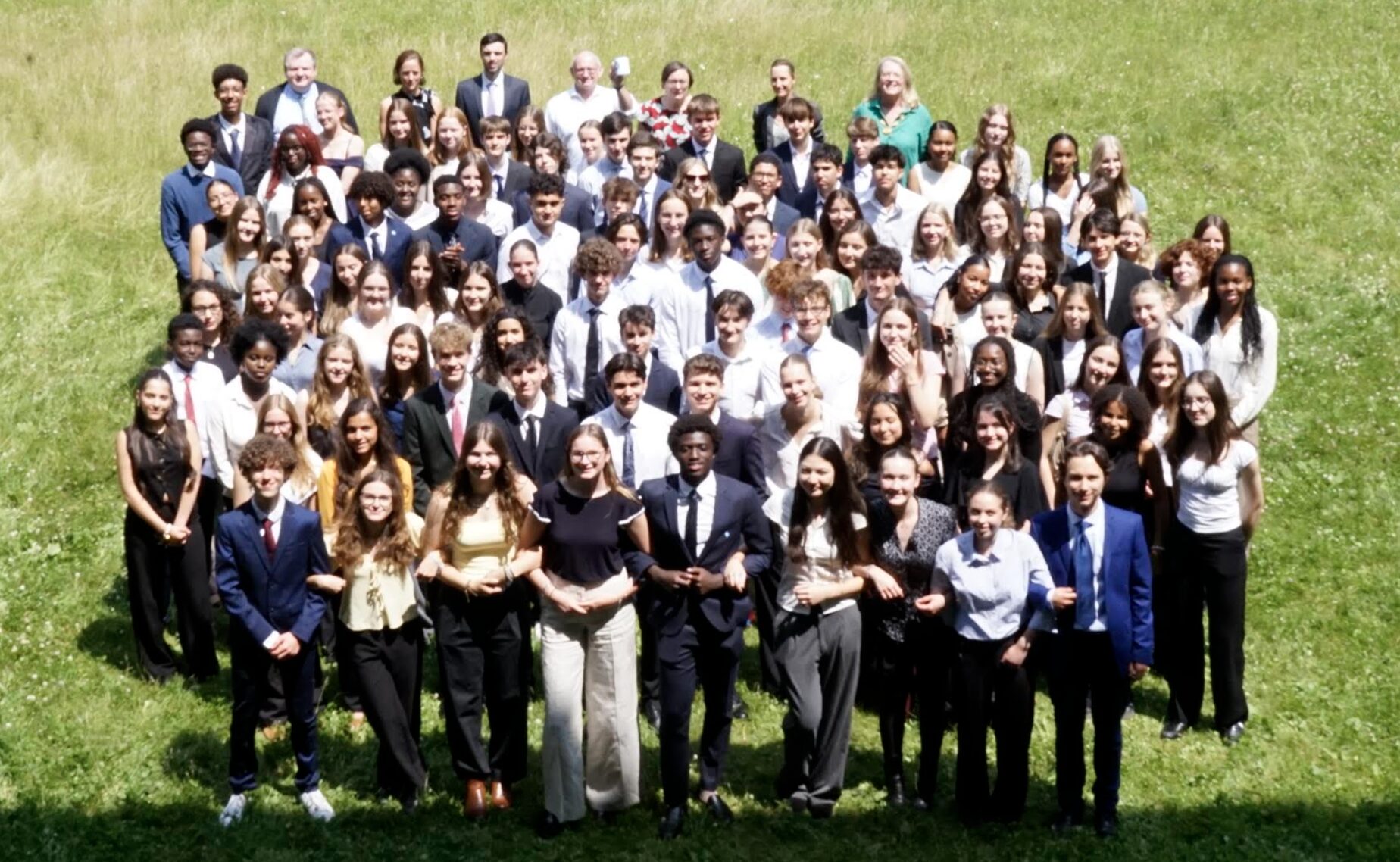
On Wednesday 11 June 2025, the Lycée international de Saint-Genis-Pouilly was transformed into a veritable UN microcosm. Students in impeccable suits, fiery speeches and rigorous debates: the MockMUN, a training conference for FerMUN reserved exclusively for delegates from the Lycée, offered an intense and formative simulation for young future diplomats.

The day began with an opening ceremony chaired by Manon Grivotet, Deputy General Secretary in charge of the Presidents. General Secretary Abdul-Salam Antwi opened the speeches with a reminder of the importance of this training event. Manon Wolniak, Deputy General Secretary in charge of delegates, encouraged everyone to get fully involved in the debates and reminded them of the important impact of this conference, its formative and emancipating side, just a few days away from the anticipated French exams for some.

Charlotte Brandon, Head of Interpreting, underlined the richness of multilingualism at FerMUN, highlighting the special role of Committee 3, the only trilingual committee. Speeches were also given by Ms Anquez, the lycée’s Deputy Headmistress, and Mr Launay, before the two chairmen of each committee presented their issues. Finally, an opening video produced by the press team was shown, officially launching the simulation day.

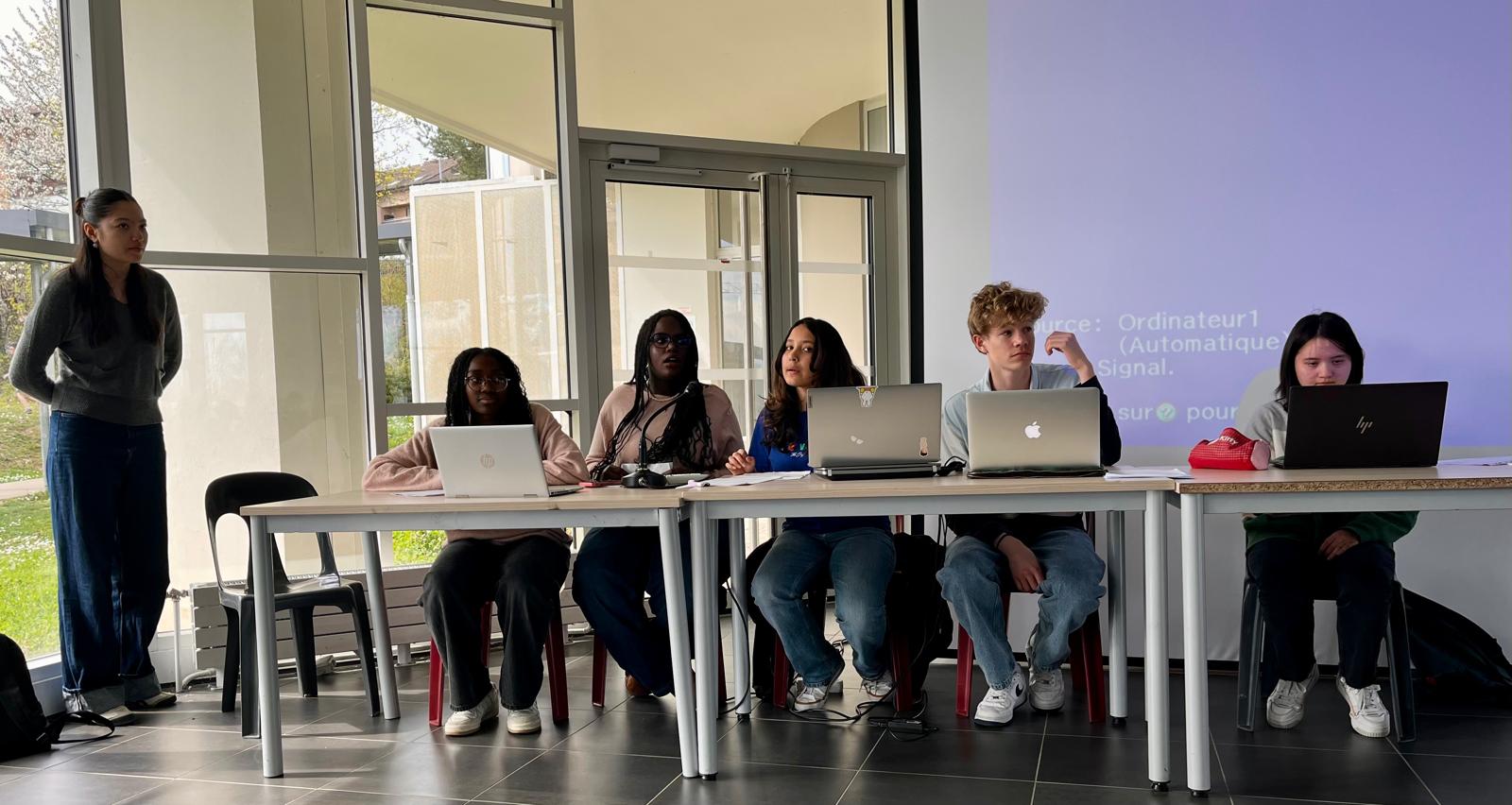
In Committee 1, devoted to the protection of journalists, there were lively exchanges on sensitive subjects such as a system for classifying journalists and the place of religions in media thinking. Tensions, alliances and diplomatic reversals animated the debates, demonstrating the complexity of the issue.

Committee 2 on the Environment was notable for its constructive atmosphere. Led by Sierra Leone, a resolution served as the basis for collective amendments. Delegates proposed innovative solutions, such as taxes on non-renewable energy or crop diversification, following the example of Côte d’Ivoire.

Within Committee 3, dedicated to the rights of LGBTQIA+ people, two visions of the world clashed: one inclusive, led by the Netherlands and co-signed by France and Brazil; the other conservative, represented in particular by Nigeria. The opposition between the two blocs led to intense debates, revealing the global divide around these issues.

Finally, Committee 4, on the militarisation of space, brought together five major powers for a technical but lively debate. Despite limited representation, the dynamism of the delegates enabled a balanced resolution to be adopted, rejecting militarisation while promoting scientific cooperation.

The closing ceremony, chaired this time by Manon Wolniak, was an opportunity to pay tribute to everyone’s work. Manon Grivotet thanked the chairmen for their commitment and dedication throughout the day, as well as during their training sessions. The other two chairmen of each committee in turn praised the commitment of the delegates and the decisions taken leading to constructive resolutions.

Livia Cauderan and Octave Nesme Jacolino, responsible for translation, expressed their gratitude to their teams. Ruben Buchot, Head of Press and Communications, thanked his journalists before launching the closing video.

Léna Seidenbinder and Adèle Philippon, in charge of the Admins and the Solidarity Fund, emphasised the importance of mutual logistical and financial support to the success of FerMUN. Finally, Mrs Baudry concluded the ceremony with a tribute to Mrs Ruez, MUN teacher, for whom this was her last lecture alongside the students.

MockMUN 2025 gave all the teams an opportunity to prepare under real-life conditions and served as a reminder of what FerMUN stands for: a collective, multilingual, demanding and deeply human project.

Ruben BUCHOT

Translated by Livia Cauderan

How Do the United Nations Guarantee Freedom of the Press?

May 3rd is World Press Freedom Day, an ideal opportunity to reflect on the various actions undertaken to protect journalists.

“The press is the only bulwark against tyranny,” said George Washington. This famous quote underlines the importance of a free press, both economically and ideologically. Yet today, press freedom is in decline across the globe. According to Anne Bocandé, editorial director of Reporters Without Borders (RSF), “without economic independence, there is no free press.” More and more media outlets are being bought by investors who use their control to spread their ideologies. In addition to this issue of independence, journalist safety is increasingly at risk: in 2024, 122 journalists were killed in the line of duty. According to UNESCO, “86% of crimes against journalists remain unpunished,” and over 1,700 journalists have been killed in total. How is a free press even possible when countries like the United States have dropped to 57th place in RSF’s global press freedom index and are now considered “problematic”?

First, UNESCO (the United Nations Educational, Scientific and Cultural Organization) has launched several awareness-raising initiatives. Chief among them is the establishment of World Press Freedom Day on May 3rd, 1991, following the adoption of the Windhoek Declaration. This day aims to inform the global public about the risks journalists face to keep the world informed. It also led to the creation of the UNESCO/Guillermo Cano World Press Freedom Prize, named after a Colombian journalist assassinated for exposing Pablo Escobar’s influence in politics. The prize annually honors an individual, organization, or institution that defends or promotes press freedom worldwide.

But what exactly is the Windhoek Declaration? Drafted in May 1991 by around sixty African journalists at the end of a seminar on developing an independent and pluralistic African press (organized by UNESCO and the United Nations), it is considered the foundation for all subsequent UNESCO texts and declarations regarding press freedom. The “Windhoek Process,” a global movement of awareness following the declaration, had several concrete outcomes:

  • The creation of the International Freedom of Expression Exchange (IFEX), a global alert network that reports violations of international standards and supports journalists in danger;
  • Support from the International Programme for the Development of Communication (IPDC), which helps private media outlets maintain financial independence.

The United Nations also adopted a Plan of Action on the Safety of Journalists and the Issue of Impunity. This plan is built on six pillars: raising awareness; defining strong international standards; implementing specialized national policies (which have already strengthened legislation in over 50 countries, according to UNESCO); monitoring and reporting; strengthening protection and legal aid mechanisms; and conducting research. The plan also led to the creation of the Coalition for the Safety of Journalists (CSJ), which fosters international cooperation to end impunity.

Finally, a partnership with the Bonavero Institute of Human Rights (University of Oxford) enabled the creation of global online training courses (MOOCs) on freedom of expression and journalist safety, aimed at members of the judiciary. The first course ran from May to June 2021. It helped legal professionals better understand the relevant legal frameworks and featured case studies, including on gender-based violence against women journalists. As a result of this MOOC, 23,000 judicial actors and civil society representatives from 150 countries have been trained on these fundamental issues.

In conclusion, UNESCO works closely with many state and private actors to defend freedom of expression and ensure the safety of journalists. The risks faced by journalists are global: for example, Juan Dayang was assassinated on May 13th in the Philippines, while Hilmi Al-Faqawi and Ahmed Mansour were killed by Israeli airstrikes in Gaza on May 7th, 2025. Press freedom remains a vital and urgent battle for human rights.

Elio Do Vales Martins

FerMUN 2026: at the heart of the committee chair selection process

When the assembly is in the middle of a debate and a delegate suddenly calls out: “Motion to move to voting procedure!”, a general “Seconded!” rings out. At this point, all the committee chairmen exchange a look of panic and uncertainty. However, with a simple nod from Manon Grivotet, then General Secretary in charge of training, it was enough to reassure them. One of the participants takes a breath and announces in a firm voice: “So now we’re going to move on to the voting procedure.” At the final plenary session of the FerMUN 2025 resolution, fourteen apprenticeship presidents, who had successfully passed the first stage of the selection process, were given the opportunity to prove themselves to the assembly in the open debate and then in the closed debate, supported by the four confirmed full presidents.

Demanding training, total commitment

Being a committee chairman at FerMUN is no easy task. At the heart of the UN simulation, committee chairmen have a key role to play: overseeing debates, guaranteeing procedure and  maintaining a rhythm, while remaining attentive to delegates. For FerMUN 2026, the selection process was once again rigorous. Supervised by Manon Grivotet, the presidential candidates first went through an initial selection process. Then came the real-life situation: during the debate on the FerMUN 2025 resolution, these students were able to practice under live conditions, co-chairing an assembly full of MUN participants.

A trainer committed to the chairs

For Manon Grivotet, this mentoring role is all part of the FerMUN journey. She confides: “It’s very important for me to accompany them in their training, because I’ve been extremely lucky to have received advice and knowledge from our former DSG Chair Jasmine. I hope to share my knowledge and to be at their side throughout the preparation and at the conference. I’m sure they will also bring me a fresh perspective on the role of chair, and I look forward to forging strong links with them!”

A team of experienced presidents to guide newcomers

This year, four student presidents have been appointed: Leya Petitjean, Lena Quéguiner, Filip Drozd and Jasmine Eugene, whose experience and rigor serve as a benchmark. Alongside them, the fourteen apprentices form a promising group of students who have already experienced the responsibilities of a committee: Blaise Arenales-Schwartz , Maya Baines , Eulalie Bohler , Elisa Bourguignon , Charlotte Dauchez , Grégoire Oury , Laurent Kogej , Clara Nguyen , Mathilda Rey , Hanae Schwebel , Nicky Taylor , Typhaine Tchognia Djamen Gnikeu Yoke , Harriet Onyango and Aimie Quéguiner.

These apprentice presidents will still have to prove themselves over the coming months, notably at MockMUN, where they will be entrusted with the chairmanship of committees. A final selection will be made at the end of the school year, prior to the FerMUN 2026 conference. For them, the objective is clear: to embody the neutrality, benevolence and mastery for which FerMUN chairs are renowned. More than a role, a responsibility.

FerMUN 2026

A new Board for a new ambition

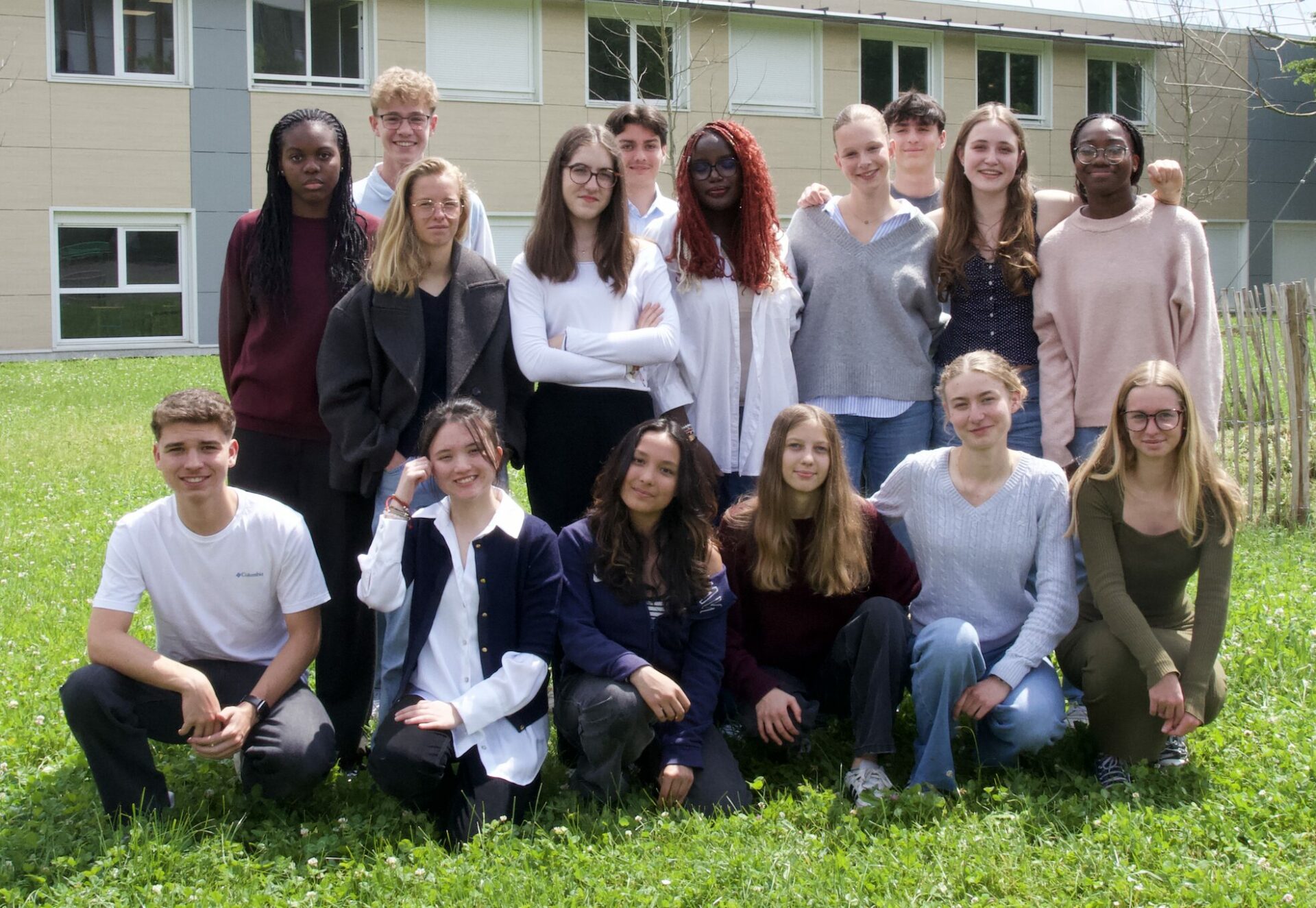
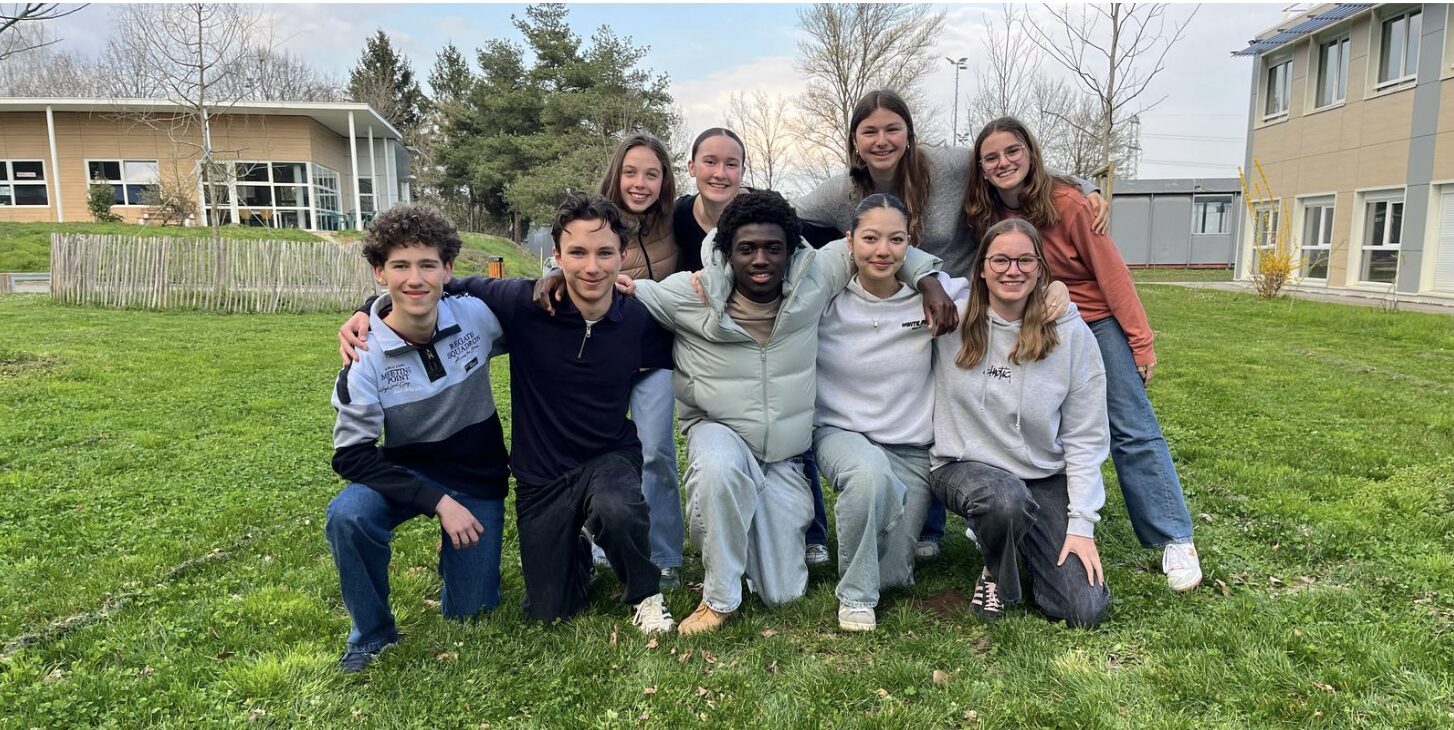
Following the undeniable success of FerMUN 2025, which brought together nearly 700 students from the four corners of the world to the International Labour Organisation to debate diplomatic issues related to work, FerMUN 2026 is now getting underway. The first essential step: the formation of its new Board of students. Made up of nine determined members, this council is ready to mobilise all its skills to make the 2026 edition as memorable as its predecessor. Let’s find out more about this new team!

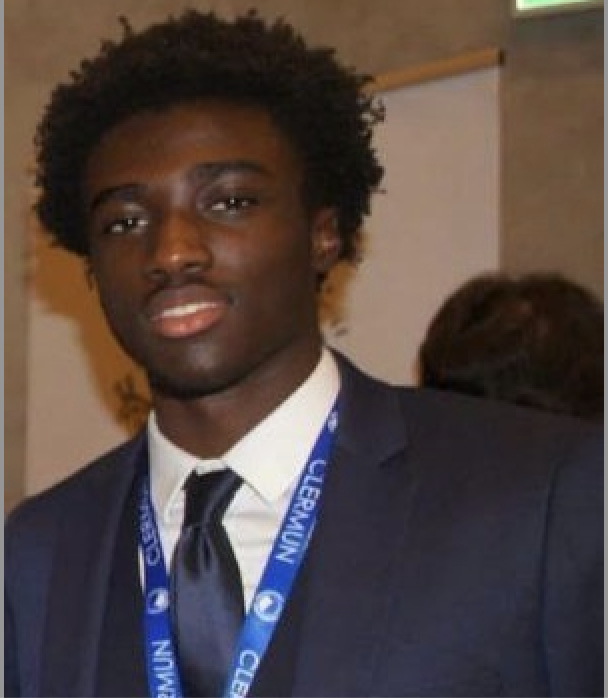
At just 16, Abdul-Salam Antwi is the Secretary General of FerMUN 2026. He is a student at the Lycée International de Ferney-Voltaire, where he is studying Mathematics, Physics and NSI. A football fan since childhood, he has followed Arsenal’s performances faithfully.

What drew him to join the board was the desire to play an active part in organising a major event. He was deeply inspired by the emotion felt by the members of the 2025 board at the closing ceremony. It convinced him to get involved in this ambitious project.

For this edition, he wants to create a dynamic, friendly and enriching atmosphere. His main objective is to make FerMUN 2026 a fully trilingual event. As general coordinator, he will ensure that all the teams function smoothly and that every participant has a memorable experience.

Finally, Abdul is keen to encourage delegates to get fully involved in the debates. For him, FerMUN is a truly international stage, where every speech is a stone added to the edifice of global dialogue.

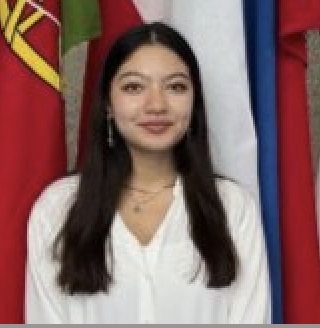
Manon Grivotet, 16, a student in 11th grade at Ferney-Voltaire high school, is Deputy Secretary General in charge of the Presidents. As a Franco-Japanese student, she grew up in Japan and Hong Kong. A keen dancer, musician and debater, she discovered FerMUN as a translator in 2024, before becoming Chair in a committee in 2025.

This experience convinced her to join the board. Inspired by the speeches of former SGs and the team spirit of the board, she sees FerMUN as a space for personal growth. She wants to form a close-knit, motivated and confident team of chairmen capable of leading high-quality debates.

Manon also wants to strengthen the Jean Calas initiative, which raises awareness of international issues among primary school students, by adding rules for debate and more interactive exchanges.

Available, a good listener and committed, she wants to act as a guide for the presidents, supporting them in their doubts, organising exchanges with external presidents, and making FerMUN 2026 a learning experience as rich as it is unforgettable.

Manon Wolniak is this year’s Deputy Secretary General in charge of the delegates for FerMUN 2026. A student at the lycée in Saint-Genis-Pouilly, she is passionate about sport, travel and reading. Above all, she loves discovering new experiences, and FerMUN is one that she considers to be particularly memorable and rewarding.

From the very first time she attended, she was won over by the unique atmosphere of the conference, the open-mindedness of the participants and the diversity of the debates. Joining the board was an opportunity for her to become more actively involved in a large-scale collective project, while developing her own skills.

Convinced that FerMUN is above all a place for exchange, dialogue and human relations, she wanted to focus on developing the delegates’ oral skills. Her ambition is that each participant should feel comfortable expressing themselves, debating with confidence and asserting themselves within the debates. She also aims to create a caring environment where all delegates, whatever their level of experience, can progress and enjoy debating. She plans to organise dynamic training sessions, to encourage delegates to help each other and to ensure that everyone finds their place in the FerMUN adventure.

For Manon, dialogue and listening are essential elements, more necessary than ever to build a better world. By joining the Board, she hopes to pass on her passion and provide the best possible support for future delegates.

Léna Seidenbinder, 16, is this year’s head of admins and the solidarity fund for FerMUN 2026, working alongside Adèle Philippon. Passionate about climbing, motocross and music, she enjoys taking on new challenges and getting fully involved in her projects. Inspired by her predecessors on the boards, she wanted to take her turn in organising such a demanding and rewarding conference.

Her vision for this year’s conference is one of kindness, openness and respect, all of which are fundamental values at FerMUN. A key objective for her this year is to increase recognition of the role of the admins, who are often underestimated even though they are essential to the smooth running of the event.

She sees herself as a mentor for new admins, ensuring that they have a stimulating and rewarding first experience. She is also actively involved in the solidarity fund, organising sales and actions to facilitate access to the conference. For Léna, every member deserves full recognition, because it’s together that FerMUN can shine.

Adèle Philipon, student at the Saint-Genis site, is head of admins and the solidarity fund this year, alongside Léna Seidenbinder. A keen traveller, reader, skier and dancer, she enjoys sharing her time with others. Once held back by her shyness, she gradually gained confidence through FerMUN, culminating in joining the board, which represented a real personal challenge.

She has explored a number of roles in previous editions, and joining the board was the ultimate experience for her. This edition is an opportunity for her to contribute to in-depth debates, while cultivating the conviviality that is FerMUN’s strength.

Together with Léna, she wants to raise the profile of the admins and make the conference more accessible thanks to the solidarity fund. She sees the admins as the future pillars of FerMUN, and wants to offer them an unforgettable first experience, full of learning, laughter and discovery.

Ruben Buchot, 17, is a Year 11 student at Ferney-Voltaire high school, and is FerMUN 2026’s head of press and communications. A theatre fan for over ten years, he is also interested in literature, geopolitics, swimming and writing. It was this last passion, combined with an interest in computing, that led him to consider a career in journalism.

Fascinated by the press team from the moment he first joined FerMUN, he has followed its development with admiration. Today, he wants to bring his own vision to FerMUN: a press that is committed, creative and rigorous.

His aim is to produce quality articles that faithfully reflect the intensity of the debates and the richness of the conference. He also wants to spread the word about FerMUN beyond its walls through a variety of media: articles, videos and social networks.

For Ruben, the press plays an essential role: a discreet but omnipresent witness, it immortalises the event and transmits its spirit, enabling everyone to keep a living record of it.

Charlotte Brandon is the Head of interpretation for FerMUN 2026. Enthusiastic, open-minded and curious, she loves getting involved in collective projects where exchange, respect and the desire to progress together reign supreme. Joining the Board was a unique opportunity for her to become more involved in a conference that she has long admired.

Her objective is clear: to offer interpreters a caring and stimulating environment, where everyone can develop their skills and gain confidence. She wants to maximise the team’s efficiency while introducing Spanish as a third official language, alongside English and French. In her view, this would enhance inclusion and open FerMUN up to a wider audience.

Charlotte also wants to encourage the interpreters to push themselves to the limit, in a motivating and supportive atmosphere. Outside FerMUN, she is passionate about skiing and trains regularly at Villard, with the ambition of becoming an instructor. As in the mountains, she sees FerMUN as a human adventure where you learn to progress together, step by step.

Livia Cauderan, a French-Americain student at the International school of Ferney-Voltaire, is head of translation in English for FerMUN 2026. Passionate about languages and convinced of the crucial role of communication in an international event, she is determined to deliver a quality translation and ensure a smooth experience for all.

Livia joined the board to contribute to the success of FerMUN and to be part of an event that goes beyond the borders of Ferney-Voltaire to bring together delegates from all over the world. She wants every participant, whether they’re a delegate, interpreter, translator or admin, to be well prepared and involved.

She makes it a point of honour to ensure that exchanges take place in a clear and precise environment, while ensuring that translation teams are supported and trained.

Convinced that trilingualism is the key to inclusion, Livia hopes that this edition will encourage a truly international dialogue. Her mission is to ensure that the debates flow smoothly, so that every voice can be heard, whatever the language.

Octave Nesme Jacolino is head of Translation in Spanish for FerMUN 2026. He has a passion for Spanish and decided to join the board to strengthen the trilingual dimension of the conference and increase the representation of Spanish-speaking countries, which are still under-represented. For him, this commitment represents the culmination of his learning of the language, in which he has invested a great deal of time and effort.

His aim is to provide a fluid and accessible translation for participants, to ensure quality exchanges. As head of translation, he wants to encourage translators to work together in a supportive and collaborative atmosphere.

Outside of FerMUN, Octave enjoys tennis, drawing and photography – passions that fuel his creativity and sense of observation. For him, each project is an opportunity to push his limits and explore new perspectives, just as in translation, where he seeks to make each text a bridge between cultures.