



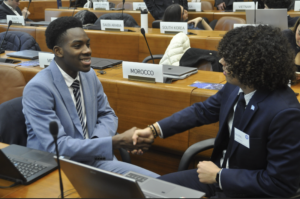
January 9, 2026, the final morning of FerMUN. In Room XI, delegates of the Artificial Intelligence Committee debate two main topics: the protection of digital workers and the regulation of AI for social justice. The AI Committee is one of the most divided, with groups of delegates opposing one another at every turn. How did this come about?
Some Barriers Remain Insurmountable
Between speeches, motions, and points of order, a clear divide between countries emerges in the room. While alliances form and connections develop, some barriers seem insurmountable. Sweden’s resolution was supported primarily by developing or underdeveloped countries, while Spain’s resolution opposes it, citing the presence of many wealthy nations among the co-signatories. The reason? Developed countries have already appropriated AI to increase wealth, giving them a more innovative vision and a focus on optimizing this strategic tool. In Sweden’s resolution, the same tool is seen as a systematic risk to employment that must be strictly regulated. One resolution prioritizes social protection, while the other aims for a labor market transition. Although these visions appear complementary, delegates struggled to find common ground. Debates erupted, clauses were discussed, and amendments were passed. At the heart of tensions, the Spanish government stood out with heated exchanges with other countries. Whether Germany or the United Kingdom, any country that voiced an opinion faced Spain’s sharp criticism. Countries remained isolated; the only solidarity was among co-signatories.
A Social Divide
The assembly is visibly split, creating a social divide. The first resolution debated, led by Sweden, is supported by all worker representatives. The difference between workers’ priorities and those of governments and employers is stark. Sweden’s resolution appears to focus on combating discrimination, addressing social tensions, and providing support to populations marginalized or harmed by AI. In contrast, Spain’s employer-backed resolution, supported by governments and employers, emphasizes innovation and digital progress on a global scale. Each group prioritizes its own interests. “Profit is not the primary goal of our society; we must think about ourselves,” noted the Saudi worker. But what does he mean by “ourselves”? Aren’t employers also thinking about themselves? India, speaking against Sweden’s resolution, also mentioned a “slowdown in formal job creation.”
This divide is evident not only during the vote but also in fiery debates, with the Saudi worker referencing the “employers’ thirst for technological progress.” There was even a motion of censure from Spain’s employer representative against the UK worker.
Reflections on the Divide
The divisions within the AI Committee prompt several questions: Can workers be considered obstacles to innovation, productivity, or modernization? Are employers and governments being selfish by not prioritizing workers’ rights? How can AI be presented as a tool for progress, aid, and innovation when it poses a threat to a large portion of the population? Sweden’s resolution ultimately passed, but narrowly: 37 in favor, 30 against. The fate of the second resolution remains undecided.
Hélène Khukhunaishvili & Dalanda Eden Diallo