



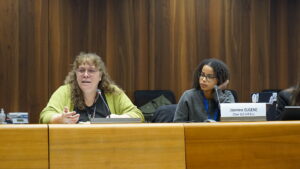
In Room II of the ILO in Geneva, a heavy silence hangs over the room. Every delegate is hanging on the words of Dorothea Schmidt-Klau, Head of the Employment, Labour Markets, and Youth Service in the Department of Employment Policies. Her advice is crucial, highlighting aspects of the issue that delegates had previously underestimated.
It is currently 9:25 a.m., and the room has been silent for nearly an hour. Today, delegates must address a crucial question: how can abuses faced by home-based workers in the informal economy be countered? They need to draft a concrete and strong resolution to help solve this problem. This is where Ms. Schmidt-Klau intervenes: her goal is to ensure the resolution is comprehensive, realistic, and protective for these workers. Responding seriously to delegates’ questions, she encourages them to continue moving in the direction they have committed to.
Ms. Schmidt-Klau began by highlighting the excellent work carried out by the delegates, worthy of the UN infrastructures where they are seated, and where they embody the role of diplomats with seriousness and conviction. She reminded the delegations of the major role of women in the informal economy, while stressing the need to recognize the many skills that workers possess. She explained that “informal domestic workers are extremely skilled […] We are talking here, for example, about women who take care of our children, and I think we can all agree that if they were not skilled, it would be truly dramatic.”
She then deemed it essential to clarify a key point regarding the objective the delegates must achieve, emphasizing that “focusing on domestic workers means focusing on reducing inequalities.”
Ms. Schmidt-Klau concluded her remarks with crucial advice for the delegates: “We don’t want a dialogue about domestic workers, but with domestic workers.” She illustrated this by explaining that in her area of specialization—ageing societies—the ILO had voted on numerous measures to assist the elderly. But by speaking directly with those concerned, she discovered that their needs were different from what diplomats had anticipated. The aim is thus to promote inclusion and listening, values crucial to the ILO, to move toward a consensus that benefits and protects informal economy workers, particularly domestic workers.
Cyrielle Bouline – Elisa Develay