



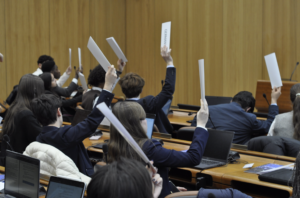
Artificial intelligence is playing an increasingly important role in the world of work, including in the arts and entertainment sectors. On this second day of debates in the Artificial Intelligence Committee at the ILO (International Labour Organization) offices, delegations, notably from Morocco and South Africa, discussed the impact of AI on artists and entertainment workers. These discussions aim to address risks related to automation, job insecurity, and the safety of cultural sector workers.
The Moroccan government emphasized the importance of protecting artists’ health and safety. According to the Moroccan delegation, “labour laws and social protection systems must apply to artists to ensure decent working conditions.” To reduce job insecurity, the delegation reiterated its support for the cultural sector, stating that “financial aid, festivals, and cultural projects help create more stable employment opportunities for artists.” They also highlighted the importance of training to help workers adapt to new technologies. On the international level, Morocco stressed that “cooperation between states is essential to regulate the use of AI and protect copyright in art and entertainment.”
The South African government highlighted its measures to protect artists. The delegation explained that “workers’ health and safety are ensured through occupational safety laws, regulation of cultural venues, and protocols applied during events.” Regarding employment stability, the delegation stated that “subsidies, training, and access to social protection help reduce job insecurity for entertainment workers.” Finally, the South African government emphasized that “countries must share best practices and harmonize international labour standards to better protect artists globally.”
Both the Moroccan and South African governments share the view that protecting artists in the face of challenges posed by artificial intelligence is essential. They agree on the importance of ensuring the health, safety, and employment stability of cultural sector workers, while strengthening training and social protection. The AI Committee debates are thus expected to focus on enhanced international cooperation and the development of common standards to regulate the use of AI and ensure a safer future for artists and entertainment workers.