WHO – The United States Facing the World

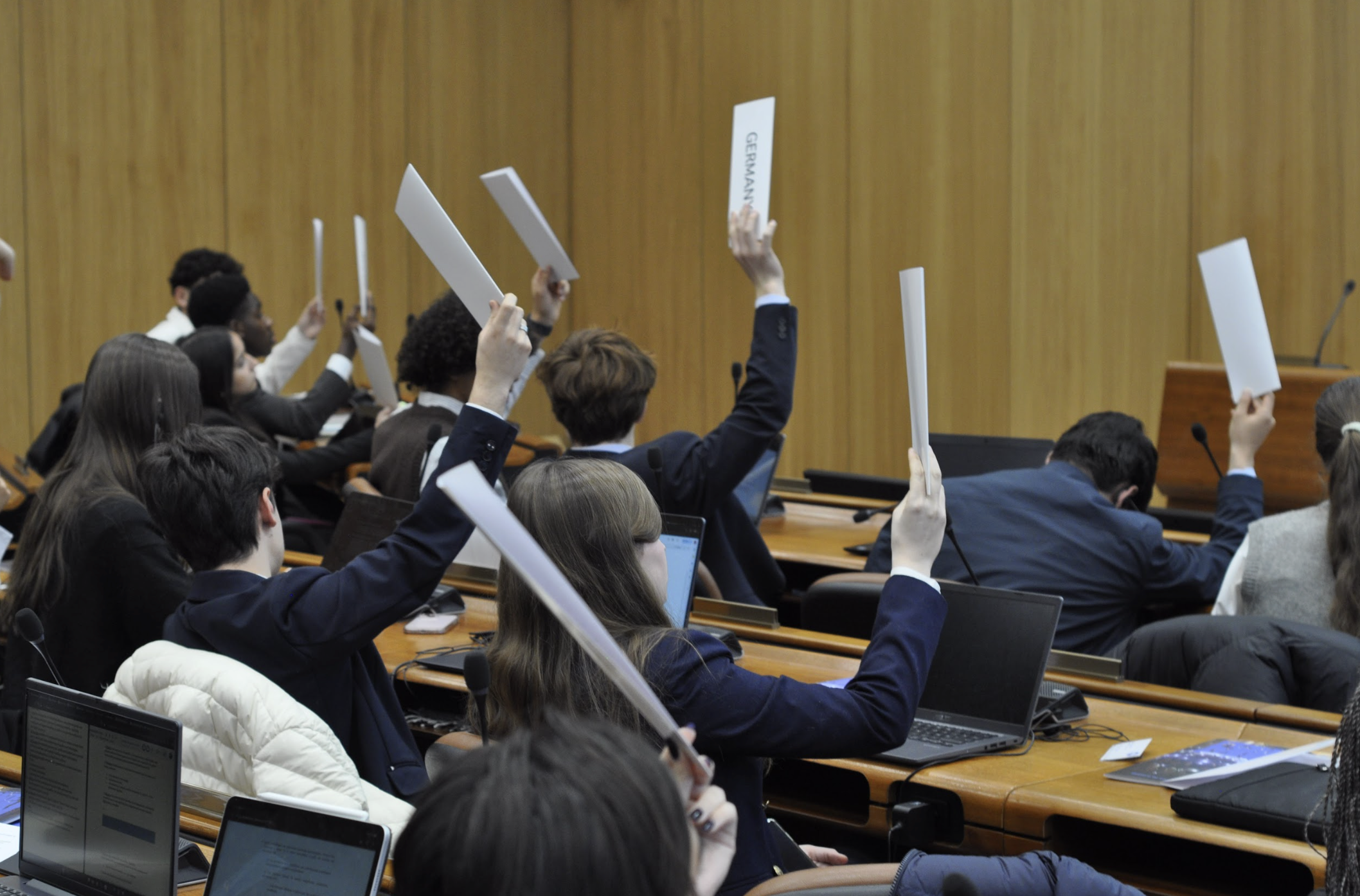
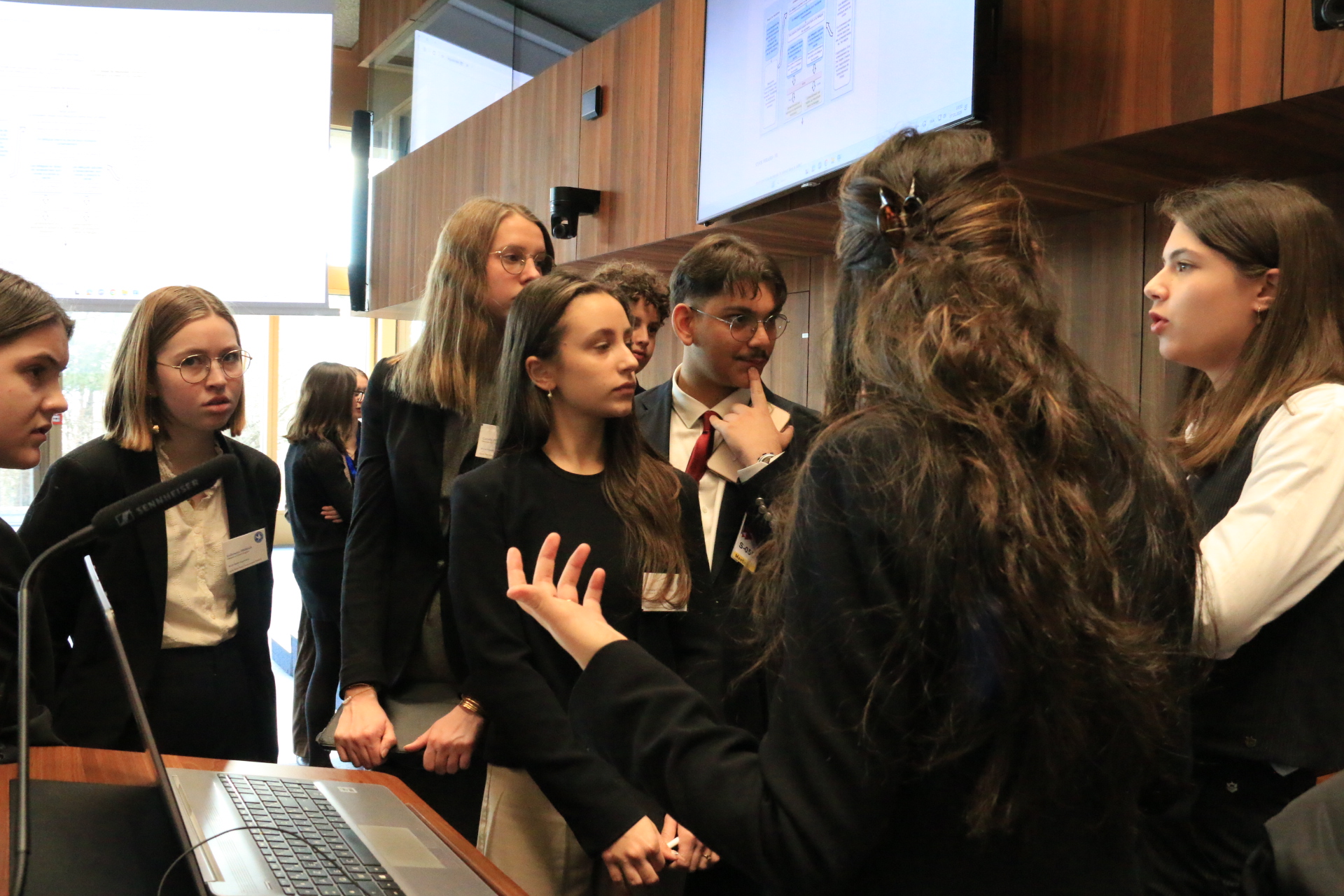
Early this morning, in a room at the ILO, the United States delegation made itself noticed by applauding and leading the entire assembly to do the same. Will their enthusiasm and ability to rally the group succeed in convincing the rest of the world to join their cause?

The creation of an international fund managed by the UN is at the heart of the debates. Funded by all states—through mineral, financial, or material resources—it would aim to redistribute medical resources fairly, particularly vaccines. Proposed by the United States, the idea quickly sparked tensions and alliance strategies.

In the ILO room, a sense of mistrust emerged. In the background: political stakes that led several delegations to form alliances opposed to the United States. “We are not with you,” declared UN OCHA as the US delegation approached. This explicit confrontation was later reinforced during a discussion between two delegates: “No one wants you, no one trusts you.” Doctors Without Borders shared the same viewpoint, voicing doubts about the intentions of the United States delegation. According to them: “They don’t need resources” and “they are unilateral and only want the benefits.”

Bringing Everyone Together for Health

Nevertheless, some delegations, such as Brazil, wished to form alliances with more developed countries like the United States but feared they did not share the same values. This lack of trust led to the formation of a strong alliance among the majority of delegations. It was notably led by the Pakistan delegation and supported by the Philippines, who, with a small embarrassed smile, said: “The United States makes promises, but their current government leads us to believe that these promises are not intended to help developing countries.”The United States delegation defended its position to ease tensions: “We do not want war; we want to bring everyone together for health.” However, other delegations seriously doubted their intentions. China, for example, found their promises paradoxical, given that it had cut UN funding.

The US delegation highlighted the gap between politics and ideology: “Health issues are international and therefore completely separate from politics.” For them—and for many of their opponents—“The only solution is multilateralism.”

Chloé Arnaud and Lilou Fréchet
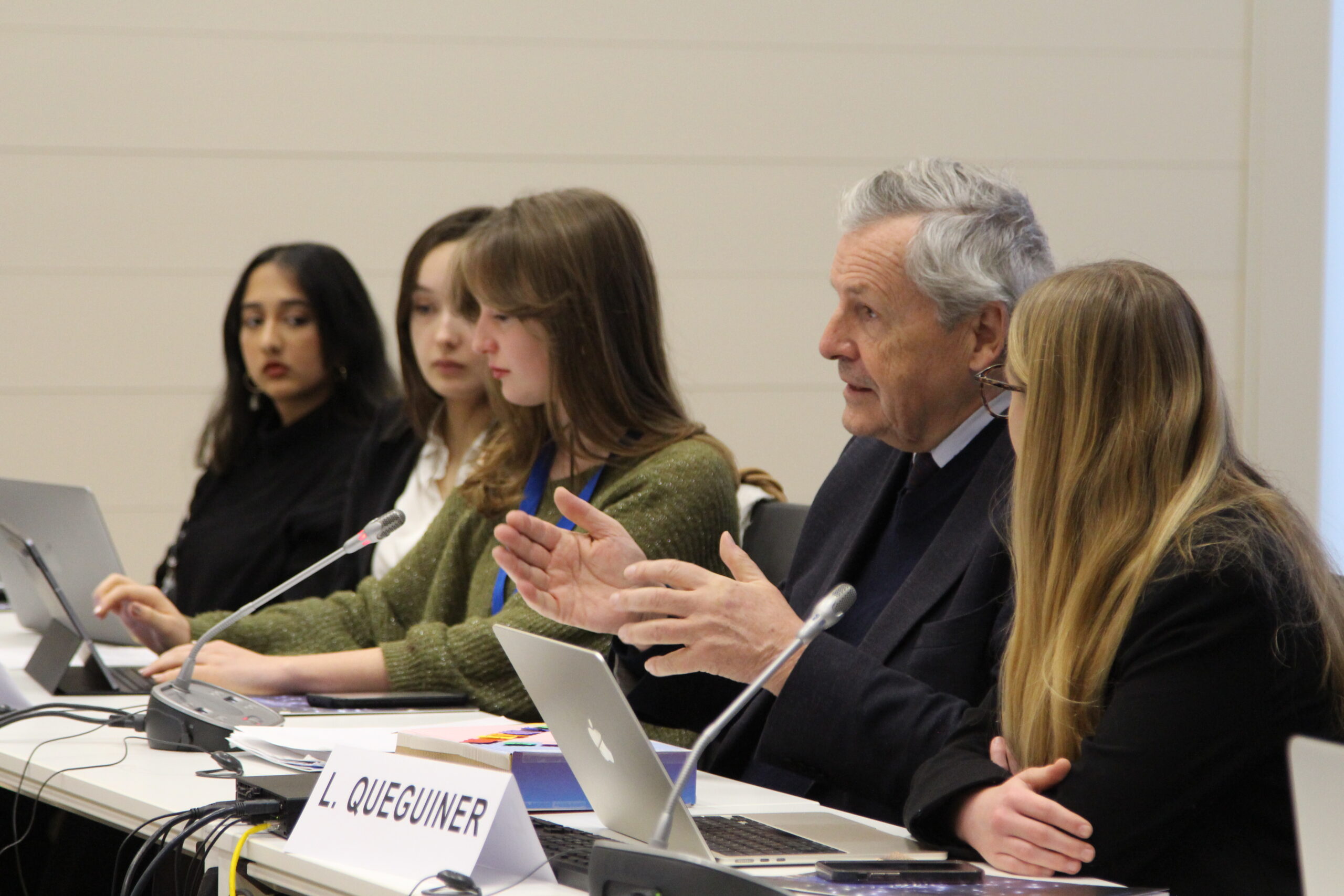
Multilateralism : interesting debate with Mr. Alain Le Roy and the young people from FerMUN

Multilateralism has been facing many challenges nowadays. In the Youth Assembly committee, the delegates from 16 countries meet to discuss current issues affecting youth at the international level. The main topic is : how can the young generation be part of multilateralism? What can we do to have an impact on this issue and get involved? During the session, the committee focused on analyzing these issues from different perspectives, looking for realistic proposals that can generate a positive impact on society.

Firstly it is important to understand what multilateralism is and where it takes place in our society. In today’s world, multilateralism is when different countries decide to work together through international organizations and agreements to solve global problems such as climate changes, international security and economic cooperation. With this, nations can share responsibilities, negotiate peacefully, and create common rules to promote stability.

With the help of Mr. Alain Le Roy, the committee was able to hear the voice of a representative of peace. He was also able to answer questions such as : “Alongside the rise of nationalism, we’re also seeing the rise of youth. What is your view on young leaders?” and “How can you make your voice heard and use it to create positive change?”

In conclusion, the debate in the Youth Assembly committee showed that multilateralism is not only a concept led by governments and international organizations, but also a space where young people can, and should participate. Through dialogue, cooperation and the exchange of ideas, delegates demonstrated that the youth has the capacity to contribute to global discussions and propose realistic solutions to current challenges.

This session highlighted the importance of giving a voice to the new generation, as their involvement is essential for the future of international cooperation. By encouraging participation, responsibility and mutual respect, the Youth Assembly reinforces the idea that multilateralism can be strengthened when young people take an active role in shaping a more cooperative and inclusive world.

Ana Luísa Franzen – Leah González Gallardo 

WORKING CONDITIONS – When Artificial Intelligence Disrupts the Art World

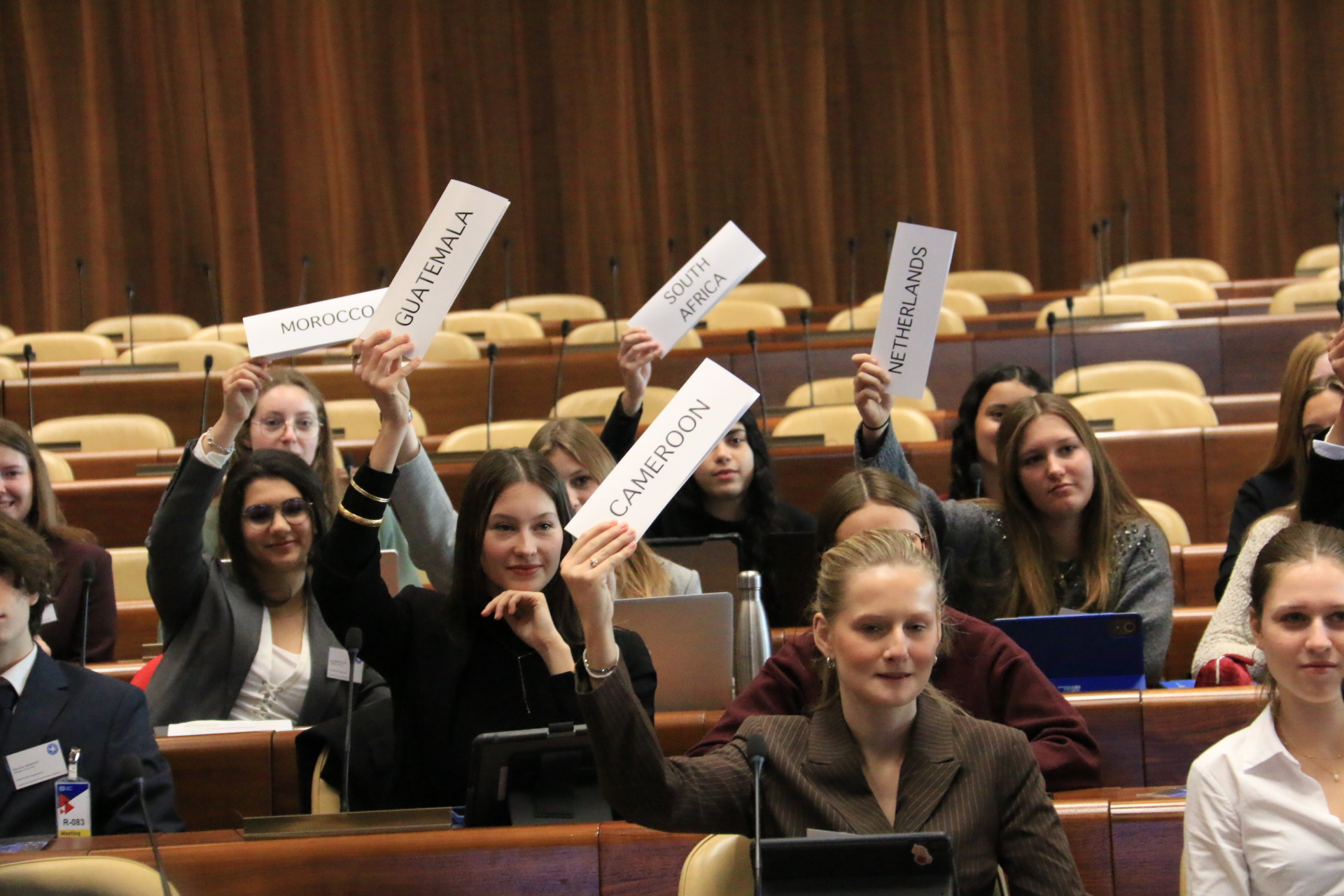
Artificial intelligence is playing an increasingly important role in the world of work, including in the arts and entertainment sectors. On this second day of debates in the Artificial Intelligence Committee at the ILO (International Labour Organization) offices, delegations, notably from Morocco and South Africa, discussed the impact of AI on artists and entertainment workers. These discussions aim to address risks related to automation, job insecurity, and the safety of cultural sector workers.

The Moroccan government emphasized the importance of protecting artists’ health and safety. According to the Moroccan delegation, “labour laws and social protection systems must apply to artists to ensure decent working conditions.” To reduce job insecurity, the delegation reiterated its support for the cultural sector, stating that “financial aid, festivals, and cultural projects help create more stable employment opportunities for artists.” They also highlighted the importance of training to help workers adapt to new technologies. On the international level, Morocco stressed that “cooperation between states is essential to regulate the use of AI and protect copyright in art and entertainment.”

The South African government highlighted its measures to protect artists. The delegation explained that “workers’ health and safety are ensured through occupational safety laws, regulation of cultural venues, and protocols applied during events.” Regarding employment stability, the delegation stated that “subsidies, training, and access to social protection help reduce job insecurity for entertainment workers.” Finally, the South African government emphasized that “countries must share best practices and harmonize international labour standards to better protect artists globally.”

Both the Moroccan and South African governments share the view that protecting artists in the face of challenges posed by artificial intelligence is essential. They agree on the importance of ensuring the health, safety, and employment stability of cultural sector workers, while strengthening training and social protection. The AI Committee debates are thus expected to focus on enhanced international cooperation and the development of common standards to regulate the use of AI and ensure a safer future for artists and entertainment workers.

ARTIFICIAL INTELLIGENCE – When Future Workers Debate Their Future in the Face of AI

In Room IX of the International Labour Organization in Geneva, debates are in full swing. Each teenager finds themselves defending a position that is different from their own regarding artificial intelligence. The stakes are high: defining workers’ rights in the face of the growing influence of AI and establishing social justice.

It is currently 11:27 a.m., and the room has been buzzing for nearly two hours. Today, participants must answer a crucial question: what is the impact of AI on workers? Delegates are required to build a strong resolution that could help workers threatened by AI and turn artificial intelligence into a safe and supportive tool for everyone. “AI is a force for the world,” declare many delegations, including the workers’ delegation of India.

While AI offers many advantages, it also represents a danger for numerous workers. “We must be careful that AI does not replace humans,” warns the delegation of the Indian government. This is a major debate that concerns several categories of workers around the world, such as secretaries, journalists, artists, and translators. Clara Nguyen, president of the committee in which the debates take place, shares her perspective: “I believe that AI can be used in a positive way, but for that, we need to establish a regulatory framework.” This view is shared by many delegations, who insist on the importance of creating regulations.

This passionate debate resonates even more strongly as the delegates know that they themselves will be the first concerned as future workers. Tomorrow, they will face artificial intelligence and its developments, issues that sometimes generate anxiety among them. As the workers’ delegation of India pointed out: “I am afraid, because AI dominates the world of work. Many jobs will be eliminated because of it.” Despite this fear, the delegation remains optimistic and reflects the confidence of tomorrow’s professionals: “I remain confident in myself.” These young delegates understand that today’s debates may be the ones that will animate conference rooms tomorrow.

Lilya Kabbaj – Elisa Develay

INFORMAL ECONOMY – Social Protection: The Showdown Over the Informal Economy Begins at FerMUN

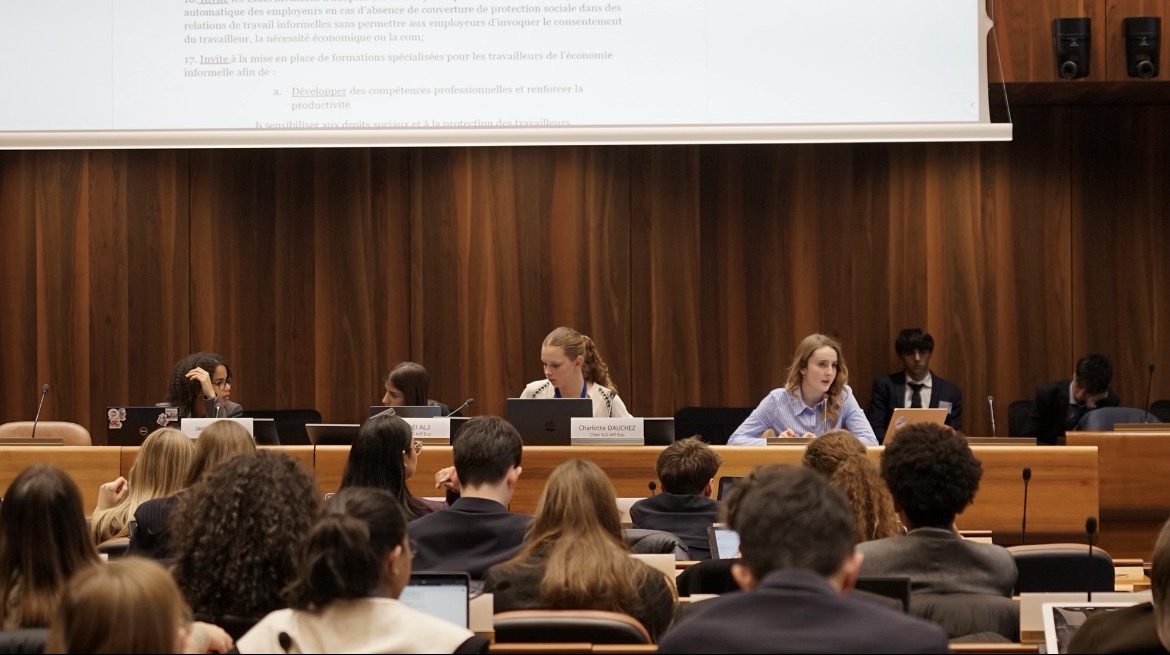
In Room II of the International Labour Organization, Jasmine, Charlotte, and Rita, committee chairs for FerMUN 2026, are preparing to oversee debates on the informal economy. On this first day, discussions focus on how countries can promote access to social protection for all individuals working in the grey economy.

At 11:53 a.m., the silence that has settled over the room is broken only by the movement of admins carrying messages from one delegate to another. It is time for delegates to draft their amendments, following a relatively eventful lobbying phase that led to the formation of two alliances. On one side, governments and workers, along with some employers from developed and occasionally emerging countries, seek to formalize the informal economy in order to make access to social protection administratively easier for the workers concerned. As stated by the delegation of the U.S. government: “No formalization of the economy, no social protection.” Opposing them are governments and employers from emerging countries, whose economies largely depend on the grey economy, as well as some workers, who believe that the methods proposed by developed countries—often less affected by informal economies—are too harsh. This is precisely the position of the Chinese employers’ delegation, which advocates for the gradual formalization of informal jobs in order to progressively reduce the informal economy, while constantly seeking economic stability.

A Generally Calm Assembly

“90% of Ethiopia’s economy is informal,” declared Ethiopian workers and employers. This explains their desire to transform the informal economy in order to secure better wages and improved working conditions for workers. Within the first session, some disagreements emerged, particularly between developed and emerging countries over the issue of financing certain measures. Ultimately, the countries concerned reached a consensus through dialogue, concretely illustrating the core values of the United Nations. Despite these disagreements, the assembly remained relatively calm—perhaps too calm, according to the committee chairs. They noted a slight lack of confrontation between differing viewpoints, as well as alliances that do not always seem aligned with the positions of the countries represented. This is notably the case with alliances between employers and workers, who often have opposing interests. Perhaps these interests will begin to surface during the open debate phase, weakening the alliance formed earlier.

Cyrielle Bouline & Djabeur Chahine

LABOUR RIGHTS – Blurred Boundaries

How can we ensure that all people engaged in professional activity earn a living wage in order to guarantee a dignified existence and reduce economic disparities? In a world where inflation is constantly evolving and wages grow at different rates, the labour rights committee raises this crucial question.

On Wednesday, January 7, at the premises of the International Labour Organization, the committee on labour rights begins drafting its resolutions. Faced with major challenges, alliances and mistrust quickly start to take shape.

Boundaries are blurred and the general buzz fills the room. On both sides, delegates are hard at work: laptops are overheating, brows are furrowed, and resolutions begin to appear on screens. Among all these voices, Brazil stands out for its determination and draws in other emerging countries. Their objective? To reduce economic inequalities and guarantee an adequate minimum income by adopting a long-term perspective and calling for this goal to be led by a new branch of the ILO.

11:30 a.m. Alliances begin to form. However, many delegations are confused: developed countries such as Germany or the United States are aligning themselves with emerging countries. The United States remains isolated, hesitant, and avoids asserting itself in discussions. Many delegates explain this restraint by pointing to the rise in anti-American sentiment reinforced by recent international events. “I understand why the United States is aligning itself with emerging countries given recent events,” stated the government of India.

As lobbying progresses, a growing divide emerges between workers, governments, and employers. The two resolutions oppose one another. The one presented by Canada, supported by a majority of governments and employers, opts for a more restrictive approach based on controls and inspections. In contrast, Brazil’s resolution proposes numerous support mechanisms.

Despite their disagreements, delegates mingle and spread out across the room. Everyone seems open to discussion and to proposals from other countries. And if this were the very spirit of multilateralism?

A Vital Intervention

At midday, Mr. Delautre, an economist specializing in employment policies, was able to shed light for students participating in FerMUN 2026 on the issue addressed by Committee 1, during a session held in Room IV of the Labour Rights Committee. He discussed the challenges and initiatives that could influence the evolution of a living minimum wage.

“I have always been passionate about economic issues and wanted to open myself to the international sphere,” said Guillaume Delautre, a member of the ILO, explaining his decision to pursue studies in economics. He later undertook training in labour law, which enabled him to build a career within the French administration.

During this session, Mr. Delautre provided valuable insights into the work of Committee 1, which focuses on labour rights. The living wage system aims to be updated through calculations of the cost of living in each country, in order to adjust the legal minimum wage accordingly. This intervention encouraged reflection on the difficulty of personalizing minimum wages for each individual, particularly in sectors such as agriculture. During the session, he also shared experiences from his travels around the world, from Egypt to Rwanda, via Geneva. He expressed a particular appreciation for the city of Abidjan in Côte d’Ivoire.

Delegates showed great curiosity, listening attentively and asking relevant questions, which Mr. Delautre was happy to answer. Feedback on the content and perspectives shared during this hour was overwhelmingly positive. “I found the intervention enlightening, especially regarding the distinction between a living wage and a living income. It helped me better understand the situations faced by farmers, for example,” testified the Swiss government delegation.

The presence of this expert provided young delegates with new insights and important knowledge that will support them throughout the debate. An engaging exchange that brought this first morning to a thoughtful close.

Nomin SANJAAJAMTS – Dalanda Eden DIALLO

At the labour rights committee, debates shake up certainties

7 January 2025. Tensions are growing in Room IX of the ILO. The United States is at the centre of discussions, despite receiving surprising criticism for its stance on working conditions. Some major powers are divided, with opinions differing.

Maintaining a balance between the health of artists and athletes and the economic interests of the country is the objective of the Chinese employers’ delegation. It then reveals the emergence of conflicts between the American and Chinese governments. 

The Russian government delegation expressed its desire to raise awareness about artists’ mental health. It emphasised the importance of addressing the shortcomings of the freelance system, particularly in the entertainment industry. Unsurprisingly, Russia refused to join forces with the United States. But the reason was unexpected, to say the least: the Russian government highlighted a contrast between the ideas and objectives of the two countries, stating that the United States favours the minimum wage and that ‘workers’ rights are not widely respected’. The debates revealed a striking paradox: Russia called out the United States for its failure to respect human rights, a symbolic reversal for a country long considered a model of democracy. 

On the other hand, Russia has formed an alliance with the Saudi Arabian government. According to the latter, “the relationship between the state and workers is not very well developed”. He admits that his country faces various problems and that working conditions present a real challenge. The Saudi government has acknowledged its difficulties in forming alliances during the lobbying phase. Could this be evidence of a lack of integration of developing countries in international decision-making? Despite this, the state has allied itself with Russia and China, while rejecting Europe and the United States – criticised not only by members of the international community, but also by their own workers. 

They particularly highlight the mistreatment of workers by employers, who use language as a tool for destabilisation. 

A disorder in priorities

It was also this delegation of American workers that caused a stir in the assembly by attempting to ally itself with the Chinese and Russian governments, fundamental enemies of its country. Although this was rejected by the presidency as unrealistic, there is a clear divide between the American government and its workers.

Faced with the crisis in working conditions, we can almost speak of a coalition of emerging and developing countries against the United States, criticising a disorder in their priorities regarding the conditions of their workers. Can we talk about propaganda on the part of Russia, China and Saudi Arabia? Or, on the contrary, are we really witnessing a reversal of geopolitical situations? Are the United States, once the world’s policeman, now disrupting human rights? One might also wonder whether the FerMUN debates accurately reflect reality, or whether they are merely a simulation produced by students who sometimes take liberties with the actual positions of the countries they represent. The finalisation of the resolution may answer these questions.

Hélène Khukhunaishvili & Agathe Sanchez

FerMUN in Istanbul

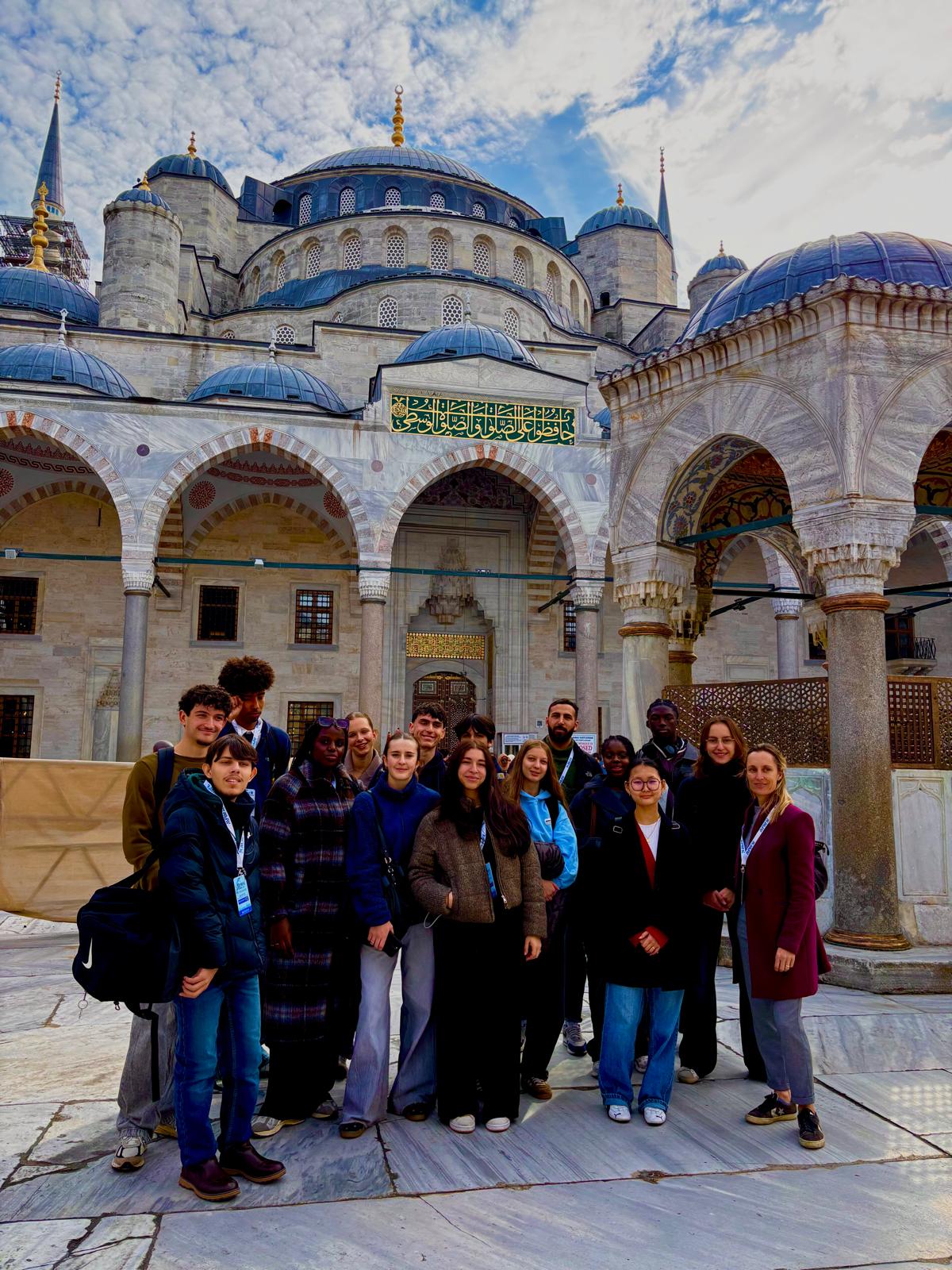
From 3rd to 8th of December, 16 students from Ferney and Saint-Genis had the opportunity to participate in MFINUE (Modèle Francophone International des Nations Unies en Eurasie) at Saint-Joseph High School in Istanbul. The week was marked by unforgettable cultural visits, new friendships and, above all, fruitful debates on a wide range of new topics. Here’s a look back at this exceptional week.

MFINUE is a unique conference with many committees that are not present at FerMUN. Walking through the corridors of Saint-Joseph, one could see a multitude of assemblies ranging from the International Court of Justice to the General Assembly and the UN Security Council. It was in this context that the high school students were able to flourish and develop their knowledge, particularly by using the veto power present in the Security Council.

They also had the opportunity to discover the historic city of Istanbul thanks to cultural visits organised by the host school. During this day punctuated by presentations on Istanbul’s various must-see sites, the Ferney students were able to discover the architectural and culinary riches of the European and Asian shores of this city that never sleeps

In short, it was a wonderful experience that left a lasting impression on everyone and enabled Ferney high school students to improve their skills ahead of FerMUN.

​​

​​​​​​​​​Elio DO VALE MARTINS

FerMUN’S STAY AT MUNUCCLE

As one of the 19 schools participating in MUNUCCLE 2025, FerMUN sent 16 students from the Cité Scolaire Internationale of Ferney-Voltaire to take part in the 8th edition of the MUNUCCLE conference, which took place from October 6th to 10th in Brussels.

The students arrived in Brussels on Monday, October 6th, before settling into the youth hostel to rest and prepare for the conference.
On their second day, they had the opportunity to visit three major European landmarks: the House of European History, the Hemicycle, and the Parlamentarium. During the museum visit, the FerMUN students deepened their understanding of European history by discovering its key periods and defining events.
The visit to the Hemicycle was led by a member of the communication team, who, through an interactive quiz, introduced the students to the functioning of the European Parliament, its history, and the role of its members.
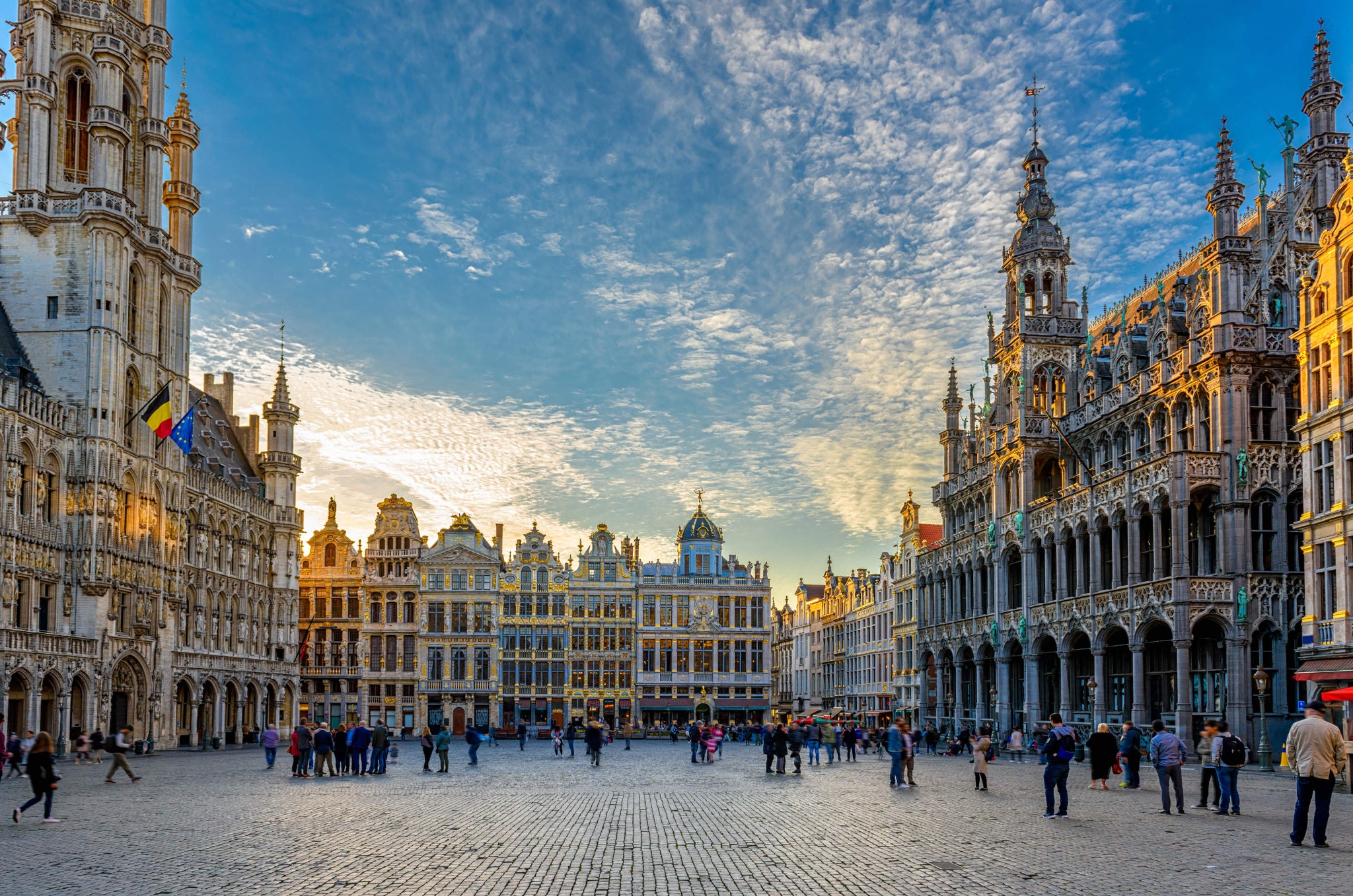
At the end of the day, the students had some free time to explore the Grand Place and Brussels’ emblematic Manneken Pis, buy souvenirs, and enjoy some local specialties.

It was on the third day that the long-awaited MUNUCCLE adventure truly began. After a warm opening ceremony led by Secretary-General Mina Konaktchiev and President Leah Guichard, the conference officially commenced.
In an atmosphere that was both serious and passionate, the forums gathered students from various schools to debate major global issues. Each participant represented a citizen and defended their views on topics such as climate, labor, global security, inequality, gender, justice, freedom of expression, the right to information, and migration.
Among our students, 11 represented citizens from countries including Niger, Kazakhstan, the Philippines, Sweden, the Republic of Korea, and Libya. In addition, four held special roles: one lawyer, two experts, and one journalist.

Guided by the roles they embodied, the students had to argue, propose solutions, and seek compromises just like real diplomats. The debates were rich, sometimes lively, but always marked by respect and attentive listening. This unique experience allowed them to better understand the complexity of international political decision-making while developing their critical thinking and public speaking skills.

The students also had the chance to relax and enjoy themselves. On Thursday evening, they attended a social event organized in Uccle. All participants, dressed up for the occasion, gathered in a friendly and festive atmosphere, making it a truly memorable evening.

Finally, after three days of intense and dynamic debates, the conference concluded with the closing ceremony. Beforehand, a General Assembly brought together all committees to debate one clause per forum. At the end of this session, the ICJ judges announced their court’s verdict.
The closing ceremony then began with speeches from the committee presidents and press editors-in-chief, followed by the presentation of awards to the best citizens and journalists, as well as honorable mentions. FerMUN was especially proud to see one of its students, Éléa Gligorijevic, receive the award for Best Delegate in the Freedom of Expression forum.
To conclude, the MUNUCCLE Secretary-General and President delivered moving speeches before inviting everyone to share one final meal together.

Thus ended these five unforgettable days in Brussels, leaving the FerMUN students with lasting memories.
We would like to sincerely thank Mr. Konieczny, biology teacher, and Ms. Massoue, history and geography teacher, for accompanying us throughout the trip. Their kindness, constant support, and good humor helped maintain a warm and positive atmosphere even during moments of fatigue or stress. Thanks to their presence and dedication, this stay was not only an enriching experience but also an unforgettable adventure.

Pink October 2025

A national campaign dedicated to the fight against breast cancer.

Every October in France, the Pink October campaign reminds people of the importance of organised screening for breast cancer, the most common cancer among women. Regional health agencies are working alongside institutional partners, associations and health professionals to raise awareness, provide information and encourage participation in screening.

Pink October is an annual breast cancer awareness campaign that began in 1985. Originating in the United States, it first appeared in France in 1994, spearheaded by Marie Claire magazine and the Estée Lauder group. Together, they created the association ‘Let’s Talk About Breast Cancer !’, renamed ‘Pink Ribbon’ in 2020.

To better understand the challenges involved in this campaign, it is worth looking at some key figures: in 2018, Santé publique France recorded 12,146 deaths per year linked to breast cancer. Although mortality has been declining since the 1990s, incidence, i.e. the number of new cases over a given period and for a given population, is on the rise. In fact, France has the highest incidence rate of breast cancer in the world.

However, survival rates for those affected have improved significantly thanks to medical advances and increased awareness. A national screening programme has been set up, offering screening to all women aged between 50 and 74 in order to detect the disease as early as possible and reduce mortality rates. In 2023, according to Santé publique France, 48.2% of women concerned participated in this programme. According to an unpublished survey published by the Ligue contre le cancer (League Against Cancer) during Pink October, 8 out of 10 women (77%) say they are in favour of setting up mobile screening units that travel to their places of residence.

The event addresses a number of issues: raising awareness about screening, improving the daily lives of women affected by this disease and advancing research. Cancer detected early offers much better chances of recovery and therefore survival. Despite the national programme, around 60% of women affected do not participate. This is mainly because many of them consider themselves to be in good health and do not believe they are at risk.                                               

In light of these findings, one message stands out: take care of yourself and get screened. But the fight against breast cancer is not limited to individual commitment. More than ever, it calls for solidarity and collective engagement. So, how can we turn these findings into hope and action?

Many associations and companies get involved in Pink October every year. The Pink Ribbon Association reports that since 2004, nearly four million euros have been raised for research and support. In addition, pink-coloured promotional items (pens, ribbons, T-shirts, caps, etc.) are available, with some of the profits going to research. At the local level, more visible symbols are also promoted: for example, the Montpellier Cancer Institute (ICM) organises the pink umbrella campaign, which has become a symbol of screening.

Finally, UN Women France reiterates the importance of supporting women and the right to gender equality: “Behind every journey, there is a story of courage and resilience […] Pink October is also an opportunity to reaffirm that listening to and supporting women are inseparable from the fight for their rights and gender equality.”

Emilie Bouzanne Des Mazery