



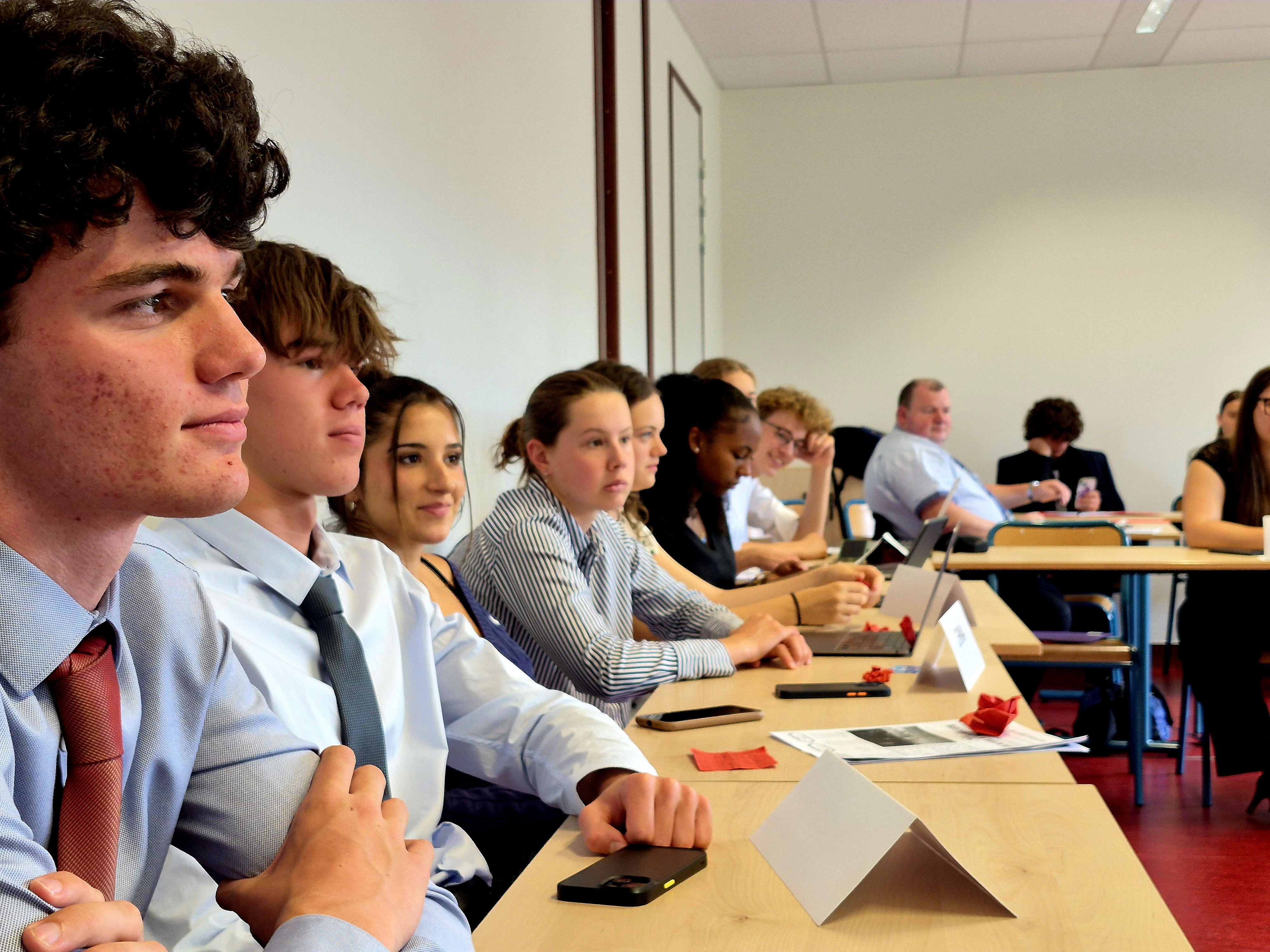
Room B107, during MockMUN 2026, was the scene of unlikely alliances and tense exchanges. When Iran and Israel form an alliance, questions inevitably arise, especially given the current geopolitical context. When it comes to regulating espionage between states while preserving national security, traditional positions can be unexpectedly overturned.
A surprising alliance given current geopolitical events
Israel and Iran drew particular attention by agreeing on the first resolution. Despite the geopolitical tensions between them, the two delegations found themselves working together, alongside Russia, China, and North Korea. All agreed on the need for greater flexibility in managing intelligence activities between states.
However, despite this temporary alignment, Iran remains in a more vulnerable position due to its conflict with Israel. This dynamic led to exchanges that were at times tense, even aggressive, between delegations that had nevertheless signed the same resolution.
A more relaxed atmosphere on the other side of the room
The second resolution, co‑sponsored by the United Kingdom, Germany, Brazil, the United States, and Switzerland, focuses more on security and the protection of civilians. It warns against the risks of insufficiently regulated state‑to‑state espionage and advocates for the adoption of stricter regulations. These countries, benefiting from a more stable geopolitical environment, approached the debates in a calmer atmosphere, which facilitated the review and adoption of amendments. This contrasted sharply with the tensions observed between delegations from countries in conflict, such as Iran and Israel.
At the conclusion of the debates, Room B107 demonstrated that diplomacy can sometimes give rise to unexpected alliances. Despite deep differences and persistent tensions, the delegations were able to defend their interests while seeking compromises, illustrating the complexity of international relations. This session nevertheless raises a question that goes beyond the scope of MockMUN: to what extent can states cooperate on common security issues when their geopolitical interests collide — a debate that remains highly relevant today.
Joana Watelet & Flore Gasser Husselstein