



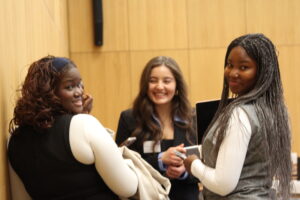
In Room IX of the International Labour Organization in Geneva, debates are in full swing. Each teenager finds themselves defending a position that is different from their own regarding artificial intelligence. The stakes are high: defining workers’ rights in the face of the growing influence of AI and establishing social justice.
It is currently 11:27 a.m., and the room has been buzzing for nearly two hours. Today, participants must answer a crucial question: what is the impact of AI on workers? Delegates are required to build a strong resolution that could help workers threatened by AI and turn artificial intelligence into a safe and supportive tool for everyone. “AI is a force for the world,” declare many delegations, including the workers’ delegation of India.
While AI offers many advantages, it also represents a danger for numerous workers. “We must be careful that AI does not replace humans,” warns the delegation of the Indian government. This is a major debate that concerns several categories of workers around the world, such as secretaries, journalists, artists, and translators. Clara Nguyen, president of the committee in which the debates take place, shares her perspective: “I believe that AI can be used in a positive way, but for that, we need to establish a regulatory framework.” This view is shared by many delegations, who insist on the importance of creating regulations.
This passionate debate resonates even more strongly as the delegates know that they themselves will be the first concerned as future workers. Tomorrow, they will face artificial intelligence and its developments, issues that sometimes generate anxiety among them. As the workers’ delegation of India pointed out: “I am afraid, because AI dominates the world of work. Many jobs will be eliminated because of it.” Despite this fear, the delegation remains optimistic and reflects the confidence of tomorrow’s professionals: “I remain confident in myself.” These young delegates understand that today’s debates may be the ones that will animate conference rooms tomorrow.
Lilya Kabbaj – Elisa Develay